


Page 112 - text book form physics kssm 2020
P. 112
Activity 3.12                                                             ICS


                  Aim: To gather information on geostationary and non-geostationary satellites in terms of
                       functions and lifespans
                  Instructions:
                  1.  Work in groups.
                  2.  Surf the internet to gather information on functions and lifespans for one geostationary
                     satellite and one non-geostationary satellite.
                  3. Present your fi ndings in the form of a folio and display it at the Resource Centre of your
                     school.

                  Discussion:
                  1.  What are the advantages of a non-geostationary satellite?
                  2.  Why do communication satellites need to be in geostationary orbits?


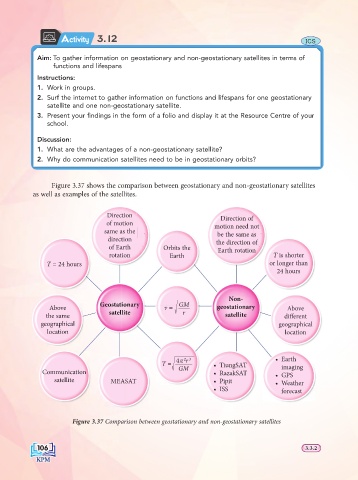
                      Figure 3.37 shows the comparison between geostationary and non-geostationary satellites
                 as well as examples of the satellites.


                                       Direction                         Direction of
                                       of motion                       motion need not
                                      same as the                       be the same as
                                       direction                        the direction of
                                        of Earth        Orbits the      Earth rotation
                                        rotation          Earth                          T is shorter
                     T = 24 hours                                                       or longer than
                                                                                          24 hours


                                                                            Non-

                                     Geostationary           GM
                      Above                             v =             geostationary        Above
                     the same           satellite             r            satellite        diff erent
                   geographical                                                            geographical
                     location                                                               location


                                                                                          • Earth
                                                              2 3
                                                            4π r
                                                       T =             • TiungSAT          imaging
                   Communication                            GM         • RazakSAT         • GPS
                       satellite        MEASAT                         • Pipit            • Weather
                                                                       • ISS               forecast


                             Figure 3.37 Comparison between geostationary and non-geostationary satellites


                  106                                                                              3.3.2
                  106
                                                                                                   3.3.2

