


Page 305 - DK Eyewitness Travel - Guides Ultimate Food Journeys
P. 305
SALVADOR BRAZIL 303
The Best Places to
Eat Acarajé
SALVADOR
Casa da Dinha inexpensive
The legendary Dinha has been making glorious
Bahian food for over 20 years from what was
originally her home kitchen in the bohemian
SALVADOR BRAZIL
district of Rio Vermelho. Her simple restaurant
seats around 50 people over two floors, and
Crispy Acarajé in Salvador serves the acarajé for which she became
famous. They’re rich and full of flavor, served
with sumptuous vatapá and a host of other
sauces (including caruru, made from okra and
Salvador’s steep, sun-baked streets are lined with glorious Baroque churches and brightly painted shrimp paste). The restaurant also offers a full
menu of traditional Bahian dishes, a huge
18th-century mansions. Music bursts from every other doorway, and in the coconut-palm-shaded
variety of delicious moquecas (see pp312–13),
squares, African Brazilians spin and swirl to the beats and claps of capoeira, a musical form of and the best fruit juices in Salvador. Be sure to
try Dinha’s suco de pitanga (cherry juice), whose
martial art. At street stands, women dressed in flowing white cook acarajé, a piquant patty.
tangy flavor perfectly complements acarajé.
Rua João Gomes 25, Largo de Santana, Salvador;
Salvador feels like a rich slice of The most famous dish is acarajé, a spicy, stuffed open noon–4 PM & 6 PM–midnight Tue–Sat;
www.casadadinhadoacaraje.com.br
tropical Africa cut from a coconut falafel-like fritter that has been sacred for centuries.
coast and transposed to Brazil. It West African Yoruba legend has it that the warrior
Also in Salvador
is a city of pearly beaches, lush goddess Iansã (also known as Oya) journeyed to
Visitors have to clamber up steep stairs from the
tropical trees, and deep yellow find a potion that would enable her to spit fire; she
cobbled street of Rua João de Deus to find the
light; of cobbled colonial streets lined with magnificent is the goddess of lightning, winds, fire, and magic.
delightful airy dining room of Axego (+55 71
UNESCO heritage buildings, vibrant with rhythm and Historically, the Yoruba people remembered her story 3242 7481; moderate) in the heart of the
ritual. Pounding drum orchestras that parade at through a fire-eating ritual in which they swallowed historical center, Pelourinho. The acarajé is
carnival troop through the narrow, Baroque-building- flaming balls of cotton soaked in dendê palm oil, possibly the best in any establishment in central
lined streets of the old center once a week. Terreiros – which were called àkàrà. Acarajé means “to eat àkàrà” Salvador, but the restaurant is equally famous
for its huge moquecas – such as moqueca
sacred temple grounds devoted to African-Brazilian in Yoruba, and the food – also covered in dendê oil –
de peixe (Bahian fish and coconut stew) –
Yoruba deities – dot the city, from the fervid favelas is still strongly associated with the ritual.
which serve at least two people.
(shanty towns) to the affluent apartment blocks on the The best acarajé is prepared by baianas, local
caramel-colored cliffs above the aquamarine Atlantic. women dressed in ritual white robes who can be found Acarajé on the Street
Under the European slave trade, more Africans were all over the city, but in the greatest numbers in Rio Baianas sell acarajé throughout the city of
transported to Salvador and its state, Bahia, than to Vermelho, a neighborhood of higgledy-piggledy streets Salvador. The most reliable stands are on
any other location in the Americas. They were mainly near the ocean. The baianas carefully mash black-eyed and around the wide plaza of the Terreiro de
Jesus in the old center of Pelourinho (which has
from the Yoruba nation (now Nigeria and the Republic beans and green onions, sprinkle the mix with salt and
good crafts fairs on weekends, too), on the
of Benin) and, against all the odds, they largely kept chili pepper, and deep-fry it in a pan of sizzling dendê
waterfront in Rio Vermelho, and around the
their homeland culture – and its cooking. Comida palm oil. The resulting patty is split and stuffed with
Mercado Vermelho, the market in Largo da
bahiana, the food of Bahia, is celebrated throughout salad and vatapá, a chili-pepper-laden shrimp, ginger, Mariquita in Rio Vermelho.
Brazil today for its full flavors, spiciness, and sauces. and peanut sauce. Truly the food of the gods.
Also in Brazil
Chef Ana Luisa Trajano spent several years
What to Drink traveling throughout Brazil, from the backwaters
of the Amazon to the hinterlands of the
You’ll need to wash down your spicy acarajé with northeastern desert, collecting recipes from
plenty of liquid, and there’s no need for canned
local people. When she returned to São Paulo,
fizzy drinks in Salvador. The city has a wealth of
tropical juices (sucos), most of which are she opened Brasil A Gosto (www.
completely unknown outside Brazil and are brasilagosto.com.br; expensive), a cozy,
brought to Bahia from all over the country – from bright restaurant on a quiet, leafy street in the
the temperate south to the rain forests of the upmarket neighborhood of Jardins. It serves
Amazon. Choose any fresh juice – you won’t be gourmet versions of authentic, traditional
disappointed. For something energy-inducing opt Brazilian dishes, including excellent acarajé.
for purple açaí, which packs a powerful pick-up In Rio de Janeiro’s bohemian neighborhood of
punch. For a healthy option buy a camu-camu – Santa Teresa, Bahian emigré Teresa Cristina
a 16-oz (half-liter) glass has almost a gram of
Machado has been selling the city’s finest
vitamin C. For simple thirst-quenching, you can’t acarajé for so long that she’s become an
beat umbu, made from the milky pulp of a
institution. Try her perfect fritters at Nega
medicinal semidesert fruit. Caja, a small fruit
that tastes like a mixture of mango and peach, Teresa (www.negateresa.com; inexpensive);
grows in Bahia and contains an amazing number visit early, before the crowds get huge.
of nutrients, including iron.
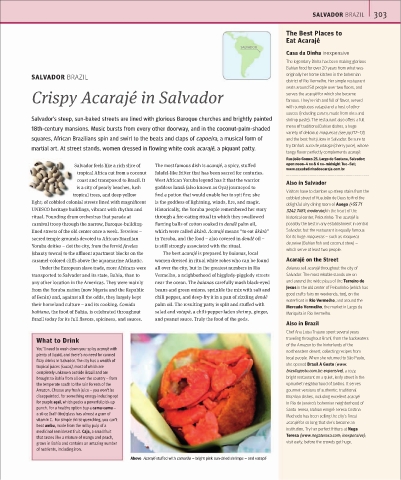
Above Acarajé stuffed with camarão – bright pink sun-dried shrimps – and vatapá

