


Page 21 - GoodHomes - India (December 2019)
P. 21
Genius
IN A NUTSHELL
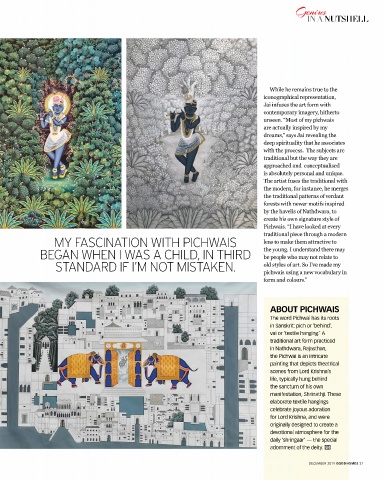
While he remains true to the
iconographical representation,
Jai infuses the art form with
contemporary imagery, hitherto
unseen. “Most of my pichwais
are actually inspired by my
dreams,” says Jai revealing the
deep spirituality that he associates
with the process. The subjects are
traditional but the way they are
approached and conceptualised
is absolutely personal and unique.
The artist fuses the traditional with
the modern, for instance, he merges
the traditional patterns of verdant
forests with newer motifs inspired
by the havelis of Nathdwara, to
create his own signature style of
Pichwais. “I have looked at every
traditional piece through a modern
MY FASCINATION WITH PICHWAIS lens to make them attractive to
BEGAN WHEN I WAS A CHILD, IN THIRD the young. I understand there may
be people who may not relate to
STANDARD IF I’M NOT MISTAKEN. old styles of art. So I’ve made my
pichwais using a new vocabulary in
form and colours.”
ABOUT PICHWAIS
The word Pichwai has its roots
in Sanskrit: pich or ‘behind’,
vai or ‘textile hanging.’ A
traditional art form practiced
in Nathdwara, Rajasthan,
the Pichwai is an intricate
painting that depicts theatrical
scenes from Lord Krishna’s
life, typically hung behind
the sanctum of his own
manifestation, Shrinathji. These
elaborate textile hangings
celebrate joyous adoration
for Lord Krishna, and were
originally designed to create a
devotional atmosphere for the
daily ‘shringaar’ — the special
adornment of the deity.
DECEMBER 2019 GOODHOMES 21

