


Page 40 - All About History - Issue 38-16
P. 40
Greatest Battles


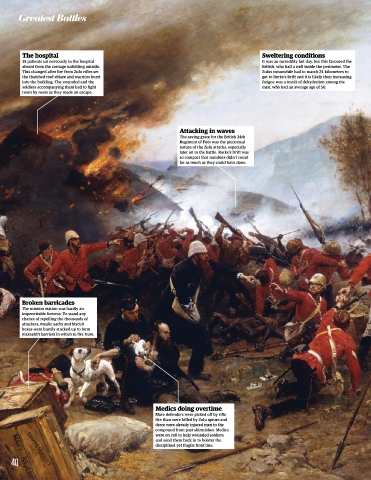
             The hospital                                                                        Sweltering conditions
             35 patients sat nervously in the hospital                                           It was an incredibly hot day, but this favoured the
             absent from the carnage unfolding outside.                                          British, who had a well inside the perimeter. The
             This changed after fire from Zulu rifles set                                        Zulus meanwhile had to march 24 kilometres to
             the thatched roof ablaze and warriors burst                                         get to Rorke’s Drift and it is likely their increasing
             into the building. The wounded and the                                              fatigue was a result of dehydration among the
             soldiers accompanying them had to fight                                             men, who had an average age of 50.
             room by room as they made an escape.


                                                                    Attacking in waves
                                                                    The saving grace for the British 24th
                                                                    Regiment of Foot was the piecemeal
                                                                    nature of the Zulu attacks, especially
                                                                    later on in the battle. Rorke’s Drift was
                                                                    so compact that numbers didn’t count
                                                                    for as much as they could have done.


             Broken barricades
             The mission station was hardly an
             impenetrable fortress. To stand any
             chance of repelling the thousands of
             attackers, mealie sacks and biscuit
             boxes were hastily stacked up to form
             makeshift barriers in which to fire from.


                                                            Medics doing overtime
                                                            More defenders were picked off by rifle
                                                            fire than were killed by Zulu spears and
                                                            there were already injured men in the
                                                            compound from past skirmishes. Medics
                                                            were on call to help wounded soldiers
                                                            and send them back in to bolster the
                                                            disciplined yet fragile front line.


         40 40


       040-043_AAH_038_GreatestBattles.indd   40                                                                             13/04/2016   22:26

