


Page 33 - History of War - Issue 18-15
P. 33
THE UNSUNG HEROES OF THE BATTLE OF BRITAIN


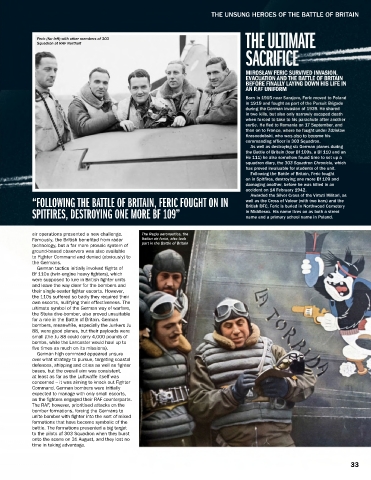
              Feric (far left) with other members of 303                               T
              Squadron at RAF Northolt
                                                                                       S


                                                                                       MI
                                                                                       EV
                                                                                       BEF
                                                                                       AN R
                                                                                       Born
                                                                                       in 19
                                                                                       durin
                                                                                       in two
                                                                                       when fo
                                                                                       sortie.
                                                                                       then on to Fran
                                                                                       Krasnodebski, who wa
                                                                                       commanding officer in 303 Squadron.
                                                                                         AswellasdestroyingsixGermanplanesd
                                                                                       theBattleofBritain(fourBf109s,aBf110and
                                                                                       He111)healsosomehowfoundtimetosetupa
                                                                                       squadron diary, the 303 Squadron Chronicle,which
                                                                                       hasprovedinvaluableforstudentsoftheunit.
                                                                                         Following the Battle of Britain, Feric fought
                                                                                       oninSpitfires,destroyingonemoreBf109and
                                                                                       damaging another, before he was killed in an
                                                                                       accident on 14 February 1942.
                                                                                         AwardedtheSilverCrossoftheVirtutiMilitari,as
            “FOLLOWINGTHEBATTLEOFBRITAIN,FERICFOUGHTONIN                               wellastheCrossofValour(withtwobars)andthe
                                                                                       British DFC, Feric is buried in Northwood Cemetery
            SPITFIRES,DESTROYINGONEMOREBF109”                                          in Middlesex. His name lives on as both a street
                                                                                       name and a primary school name in Poland.


             ir operations presented a new challenge.  The Regia aeronautica, the
            Famously,theBritishbenefitedfromradar  Italianairforce,alsotook
                                                   part in the Battle of Britain
             echnology,butafarmoreprosaicsystemof
            ground-based observers was also available
             o Fighter Command and denied (obviously) to
             he Germans.
              German tactics initially involved flights of
            Bf 110s (twin-engine heavy fighters), which
            were supposed to lure in British fighter units
            andleavethewayclearforthebombersand
            their single-seater fighter escorts. However,
            the 110s suffered so badly they required their
            own escorts, nullifying their effectiveness. The
            ultimate symbol of the German way of warfare,
            the Stuka dive-bomber, also proved unsuitable
            for a role in the Battle of Britain. German
            bombers, meanwhile, especially the Junkers Ju
            88,weregoodplanes,buttheirpayloadswere
            small(theJu88couldcarry4,000poundsof
            bombs, while the Lancaster would haul up to
            five times as much on its missions).
              German high command appeared unsure
            over what strategy to pursue, targeting coastal
            defences, shipping and cities as well as fighter
            bases, but the overall aim was consistent,
            atleastasfarastheLuftwaffeitselfwas
            concerned – it was aiming to knock out Fighter
            Command. German bombers were initially
            expected to manage with only small escorts,
            as the fighters engaged their RAF counterparts.
            TheRAF,however,prioritisedattacksonthe
            bomber formations, forcing the Germans to
            unitebomberwithfighterintothesortofmixed
            formations that have become symbolic of the
            battle. The formations presented a big target
            to the pilots of 303 Squadron when they burst
            onto the scene on 31 August, and they lost no
            time in taking advantage.


                                                                                                                            33

