


Page 105 - (DK Eyewitness) Travel Guide - Argentina
P. 105
REC OLE T A 103
The Dogs of Recoleta
It is common for wealthy Recoleta families, living in an apartment
without the required open space, to hire a paseador (a professional
dog-walker). Since it became fashionable during the 1970s to own a
pure-breed mutt – huskies, chows, and rare breeds are particularly
desirable – wealthier porteño families have paid a young, usually
male, person to walk their dog. There is great demand for the service,
and every employee will happily walk between ten and 25 dogs,
looking rather like a maypole at the center of dancing, dueling, and
occasionally knotting, ribbons. Recoleta’s wide, green spaces and
Palermo’s lovely Parque
3 de Febrero are the
preferred rest stops, as
they are located close to
the dogs’ palatial homes
and are ideal for a run in
the open. Unfortunately,
there is little control of dog
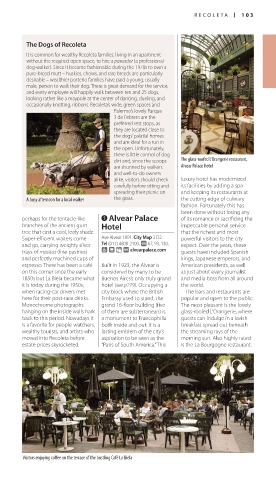
dirt and, since the scoops The glass-roofed L'Orangerie restaurant,
are shunned by walkers Alvear Palace Hotel
and well-to-do owners
alike, visitors should check luxury hotel has modernized
carefully before sitting and its facilities by adding a spa
spreading their picnic on and keeping its restau rants at
A busy afternoon for a local walker the grass. the cutting edge of culinary
fashion. Fortunately this has
been done without losing any
perhaps for the tentacle-like 5 Alvear Palace of its romance or sacrificing the
branches of the ancient gum Hotel impeccable personal service
tree that cast a cool, leafy shade. that the richest and most
Super-efficient waiters come Ave Alvear 1891. City Map 3 D2. powerful visitors to the city
and go, carrying weighty silver Tel (011) 4808-2100. @ 67, 93, 130. expect. Over the years, these
trays of masitas (fine pastries) 7 - = ∑ alvearpalace.com guests have included Spanish
and perfectly machined cups of kings, Japanese emperors, and
espresso. There has been a café Built in 1923, the Alvear is American presidents, as well
on this corner since the early considered by many to be as just about every journalist
1850s but La Biela became what Buenos Aires’s only truly grand and media boss from all around
it is today during the 1950s, hotel (see p279). Occupying a the world.
when racing-car drivers met city block where the British The bars and restaurants are
here for their post-race drinks. Embassy used to stand, the popular and open to the public.
Monochrome photographs grand 16-floor building (five The most pleasant is the lovely
hanging on the inside walls hark of them are subterra nean) is glass-roofed L’Orangerie, where
back to this period. Nowadays it a monu ment to Francophilia guests can indulge in a lavish
is a favorite for people-watchers, both inside and out. It is a breakfast spread out beneath
wealthy tourists, and artists who lasting emblem of the city’s the streaming rays of the
moved into Recoleta before aspiration to be seen as the morning sun. Also highly rated
estate prices skyrocketed. “Paris of South America.” This is the La Bourgogne restaurant.
Visitors enjoying coffee on the terrace of the bustling Café La Biela
102-103_EW_Argentina.indd 103 05/08/16 10:40 am

