


Page 301 - (DK Eyewitness) Travel Guide - Australia
P. 301
INTRODUCING WESTERN A USTR ALIA 299
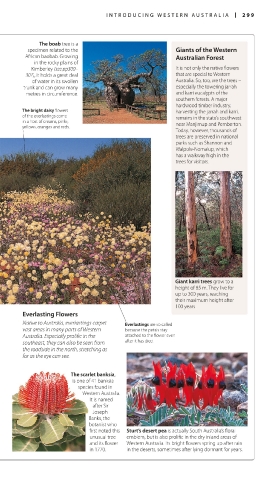
The boab tree is a
specimen related to the Giants of the Western
African baobab. Growing Australian Forest
in the rocky plains of
Kimberley (see pp300– It is not only the native flowers
301), it holds a great deal that are special to Western
of water in its swollen Australia. So, too, are the trees –
trunk and can grow many especially the towering jarrah
metres in circumference. and karri eucalypts of the
southern forests. A major
hardwood timber industry,
The bright daisy flowers harvesting the jarrah and karri,
of the everlastings come remains in the state’s southwest
in a host of creams, pinks,
yellows, oranges and reds. near Manjimup and Pemberton.
Today, however, thousands of
trees are preserved in national
parks such as Shannon and
Walpole-Nornalup, which
has a walkway high in the
trees for visitors.
Giant karri trees grow to a
height of 85 m. They live for
up to 300 years, reaching
their maximum height after
100 years.
Everlasting Flowers
Native to Australia, everlastings carpet Everlastings are so called
vast areas in many parts of Western because the petals stay
Australia. Especially prolific in the attached to the flower even
southeast, they can also be seen from after it has died.
the roadside in the north, stretching as
far as the eye can see.
The scarlet banksia,
is one of 41 banksia
species found in
Western Australia.
It is named
after Sir
Joseph
Banks, the
botanist who
first noted this Sturt’s desert pea is actually South Australia’s floral
unusual tree emblem, but is also prolific in the dry inland areas of
and its flower Western Australia. Its bright flowers spring up after rain
in 1770. in the deserts, sometimes after lying dormant for years.

