


Page 78 - (DK Eyewitness) Travel Guide - Australia
P. 78
76 SY DNEY
Sydney Cove to Walsh Bay Conservatorium
of Music
It is estimated that over 70 km (43 miles) of harbour
foreshore have been lost as a result of the massive land
r r reclamation projects carried out since the 1840s. That eclamation projects carried out since the 1840s. That eclamation pro
the 13 islands existing when the First Fleet arrived in
1788 have now been reduced to just eight is a startling
indication of rapid and profound geographical
transformation. Redevelopments around the Circular
Quay and Walsh Bay area from the 1980s have opened
up the waterfront for public use and enjoyment,
acknowledging it as the city’s greatest natural asset.
Sydney’s environmental and architectural aspirations
recognize the need to integrate city and harbour.
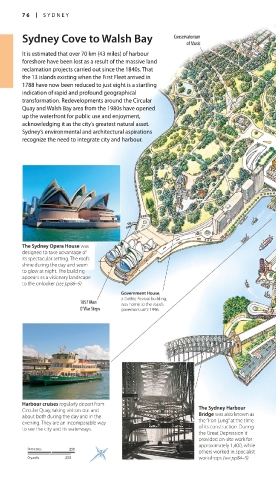
The Sydney Opera House was
designed to take advantage of
its spectacular setting. The roofs
shine during the day and seem
to glow at night. The building
appears as a visionary landscape
to the onlooker (see pp88–9).
Government House,
a Gothic Revival building,
1857 Man was home to the state’s
O’War Steps governors until 1996.
Harbour cruises regularly depart from
Circular Quay, taking visitors out and The Sydney Harbour
about both during the day and in the Bridge was also known as
evening. They are an incomparable way the “Iron Lung” at the time
to see the city and its waterways. of its construction. During
the Great Depression it
provided on-site work for
approximately 1,400, while
0 metres 250
others worked in specialist
0 yards 250 workshops (see pp84–5).

