


Page 215 - (DK) Help Your Kids with Growing Up: A No-Nonsense Guide to Puberty and Adolescence
P. 215
C OMING  OUT       213

                                                   Making the decision
                                                   Coming out to friends and family is a big and brave step to take. Most
                                                   people choose to share their gender or sexual identity when they feel
                                                   loved and supported. Confiding in supportive people is normally a
                                                   positive experience for most LGBTQ+ individuals, as it can lead to
                                                   more honest, open relationships and create a network of support.
                                                     Not everyone who identifies as LGBTQ+ has to come out, however.
                                                   The decision to do so is completely personal. If someone prefers not
                                                   to come out, perhaps because they face homophobia at home, in
        △  No rush                                 the workplace, or at school, that decision should be respected.
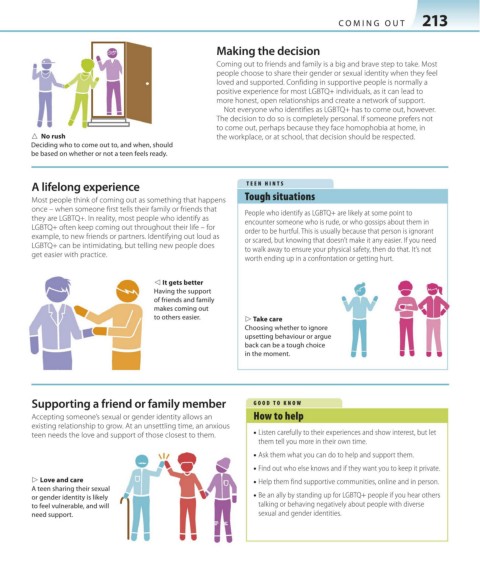
        Deciding who to come out to, and when, should
        be based on whether or not a teen feels ready.


        A lifelong experience                             TEEN  HINTS
        Most people think of coming out as something that happens   Tough situations
        once – when someone first tells their family or friends that   People who identify as LGBTQ+ are likely at some point to
        they are LGBTQ+. In reality, most people who identify as   encounter someone who is rude, or who gossips about them in
        LGBTQ+ often keep coming out throughout their life – for   order to be hurtful. This is usually because that person is ignorant
        example, to new friends or partners. Identifying out loud as   or scared, but knowing that doesn’t make it any easier. If you need
        LGBTQ+ can be intimidating, but telling new people does   to walk away to ensure your physical safety, then do that. It’s not
        get easier with practice.
                                                         worth ending up in a confrontation or getting hurt.

                                    ◁ It gets better
                                    Having the support
                                    of friends and family
                                    makes coming out
                                    to others easier.    ▷ Take care
                                                         Choosing whether to ignore
                                                         upsetting behaviour or argue
                                                         back can be a tough choice
                                                         in the moment.


        Supporting a friend or family member               GOOD  T O  KNO W
        Accepting someone’s sexual or gender identity allows an   How to help
        existing relationship to grow. At an unsettling time, an anxious
        teen needs the love and support of those closest to them.  • Listen carefully to their experiences and show interest, but let
                                                             them tell you more in their own time.
                                                           • Ask them what you can do to help and support them.
                                                           • Find out who else knows and if they want you to keep it private.
        ▷ Love and care                                    • Help them find supportive communities, online and in person.
        A teen sharing their sexual
        or gender identity is likely                       • Be an ally by standing up for LGBTQ+ people if you hear others
        to feel vulnerable, and will                         talking or behaving negatively about people with diverse
        need support.                                        sexual and gender identities.


   212-213_Coming_out.indd   213                                                                     24/03/2017   17:20

