


Page 214 - (DK) Help Your Kids with Growing Up: A No-Nonsense Guide to Puberty and Adolescence
P. 214
212       SEXU ALIT Y


        Coming out                                                         SEE ALSO
                                                                           ‹
                                                                           ‹ 24–25  Gender
                                                                            206–207  Sexuality
        The term “coming out” is used when a person shares their sexual    ‹ 208–209  Different sexual identities
        or gender identity with others. For the person who is coming out,   ‹ 210–211  Attraction
        it can be both daunting and rewarding to be honest and open
        about who they are and how they really feel.

        Everyone comes out about something

        Coming out is usually understood as a person telling friends and family that
        they identify as LGBTQ+. But in a broader sense, it means revealing something
        to another person. It is usually something important to a person’s identity, for
        example, their religious or political beliefs, or an event from their past. Sharing
        this information can make people feel vulnerable, and, because of this, many
        individuals take a long time to decide when and how to come out. For LGBTQ+
        people, coming out ultimately allows them to embrace how they feel.


        Ways of coming out                                   P ARENT  TIPS
        Everybody comes out in different ways. Many people come out to   If your teen comes out to you
        someone less critical to their life before telling family and friends.   • Discuss people who are LGBTQ+ openly and positively, so
        Others prefer to tell their parents and closest friends first. Some   your teen knows you will be okay if they come out to you.
        tell the people in their lives one by one, while others choose to
        come out to everyone at the same time. It’s possible for a person   • It may be a shock at first, but try to stay calm and praise
        to be out to some people but not others – for example, out at   them for sharing. Your teen is still the same person.
        school but not at home, or vice versa.               • Teens may not be able to explain fully their own feelings at
          It can be useful to find out how family or friends feel about   first. Be patient and allow them time to figure things out.
        different sexualities in advance, to try to find out what reaction to
        expect. Some people may be more surprised than others, or take   • There are many organizations that provide support for both
        longer to absorb such new information. Whoever they are, the   parents of LGBTQ+ teens and LGBTQ+ teens themselves.
        first person to know should always be someone trusted who will
        respond with kindness and acceptance.
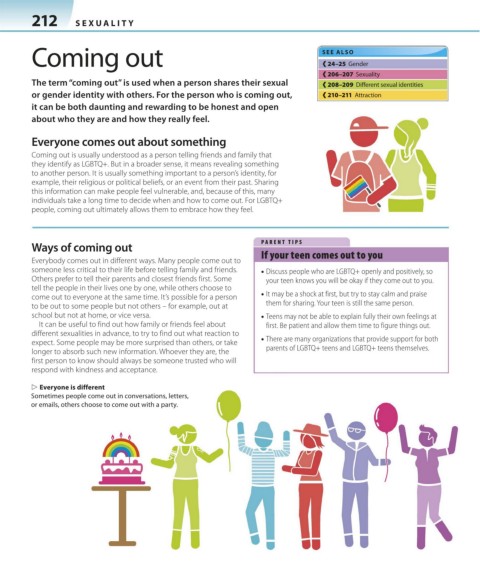
        ▷ Everyone is different
        Sometimes people come out in conversations, letters,
        or emails, others choose to come out with a party.


   212-213_Coming_out.indd   212                                                                     24/03/2017   17:20

