


Page 23 - (DK) Help Your Kids with Growing Up: A No-Nonsense Guide to Puberty and Adolescence
P. 23
MOOD  SWINGS           21

        The causes of mood swings                                   P ARENT  TIPS
        During puberty, parts of the brain mature at different rates. The limbic   Supporting your teen
        system, the part responsible for emotions and feelings, develops early
        on. The prefrontal cortex, which regulates a person’s response to their   • If your teen is experiencing extreme emotions, try
        emotions, doesn’t develop until later, towards the end of puberty. While   to identify and support them with the underlying
        the prefrontal cortex catches up with the limbic system, teens tend to   cause or feeling, rather than focusing on their
        experience extreme emotions and are generally less able to control their   behaviour.
        emotional responses, resulting in mood swings.              • Give them space to relax and let them know
          Mood swings aren’t just down to teenage brain development,    you’re there for them. Once your teen is calm,
        however. The pressures of puberty – encountering new situations, feeling    talk through any issues together.
        self-conscious, coping with peer pressure and increased expectations,
        and worries about exams, relationships, and the future – all play a major
        role in teens’ changing moods.


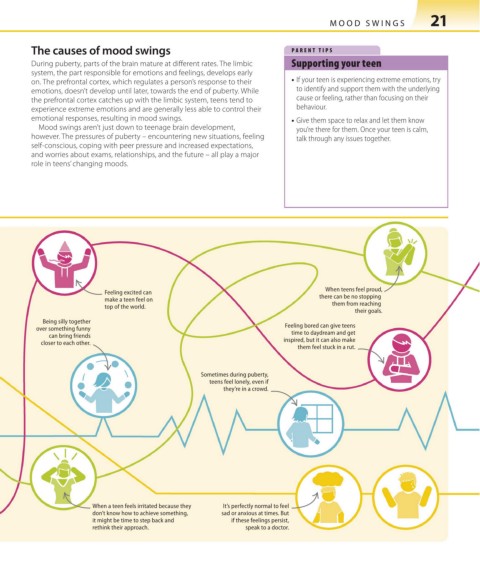
                                                                            When teens feel proud,
                         Feeling excited can
                         make a teen feel on                               there can be no stopping
                                                                              them from reaching
                         top of the world.
                                                                                   their goals.
           Being silly together
         over something funny                                      Feeling bored can give teens
            can bring friends                                       time to daydream and get
          closer to each other.                                   inspired, but it can also make
                                                                      them feel stuck in a rut.

                                               Sometimes during puberty,
                                                 teens feel lonely, even if
                                                    they’re in a crowd.


                      When a teen feels irritated because they   It’s perfectly normal to feel
                      don’t know how to achieve something,   sad or anxious at times. But
                      it might be time to step back and   if these feelings persist,
                      rethink their approach.             speak to a doctor.


   020-021_299754_HYKWGU_Mood_swings.indd   21                                                       24/03/2017   17:15

