


Page 233 - (DK) Help Your Kids with Growing Up: A No-Nonsense Guide to Puberty and Adolescence
P. 233
SAFER  SEX 231


          Practising safer sex

          STIs can be transmitted via foreplay, and during all types of sex. They may be spread
          through contact with the genitals or through exchanging bodily fluids (including blood,
          semen, and discharge from the vagina and anus). There are various ways to reduce the
          risk of catching or transmitting an STI. Here are just a few:


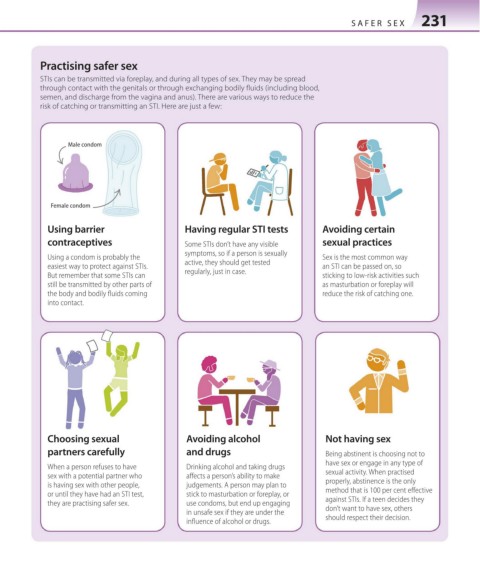
                 Male condom


             Female condom

            Using barrier                   Having regular STI tests       Avoiding certain
            contraceptives                  Some STIs don’t have any visible   sexual practices
            Using a condom is probably the   symptoms, so if a person is sexually   Sex is the most common way
            easiest way to protect against STIs.   active, they should get tested   an STI can be passed on, so
            But remember that some STIs can    regularly, just in case.    sticking to low-risk activities such
            still be transmitted by other parts of                         as masturbation or foreplay will
            the body and bodily fluids coming                              reduce the risk of catching one.
            into contact.


            Choosing sexual                 Avoiding alcohol                Not having sex
            partners carefully              and drugs                       Being abstinent is choosing not to

            When a person refuses to have    Drinking alcohol and taking drugs   have sex or engage in any type of
            sex with a potential partner who    affects a person’s ability to make   sexual activity. When practised
            is having sex with other people,    judgements. A person may plan to   properly, abstinence is the only
            or until they have had an STI test,   stick to masturbation or foreplay, or   method that is 100 per cent effective
            they are practising safer sex.  use condoms, but end up engaging   against STIs. If a teen decides they
                                            in unsafe sex if they are under the   don’t want to have sex, others
                                            influence of alcohol or drugs.  should respect their decision.


   230-231_299754_HYKWGU_Safer_sex.indd   231                                                        24/03/2017   17:20

