


Page 79 - (DK) Help Your Kids with Growing Up: A No-Nonsense Guide to Puberty and Adolescence
P. 79
SLEEP       77

        The circadian rhythm                               GOOD  T O  KNO W

        The circadian rhythm is a hormone cycle responsible for   Insomnia
        creating feelings of wakefulness and sleepiness in humans. It’s
        linked to the body’s level of melatonin, a hormone produced   Having difficulty falling, or staying, asleep is known as insomnia.
        by the brain, and also influenced by exposure to light. When   People who have insomnia often wake up feeling unrefreshed,
        the sun goes down, the brain raises melatonin levels causing   find it hard to nap even when they feel tired, and are often
        tiredness. When it’s light again, melatonin levels fall prompting   unable to concentrate in the daytime. Insomnia can be caused
        a person to wake up.                               by a multitude of things, including anxiety and stress, other
          The differences between a teen’s rhythm and an adult’s help   health conditions, lifestyle factors, or bad sleeping habits.
        to explain why many teens struggle to wake up early. Teen   Avoiding caffeinated drinks for a few hours before going bed
        brains start releasing melatonin later than adult brains do,   and limiting the use of electronic devices in the evening might
        around two to three hours later, meaning they feel don’t feel   help, but it’s worth seeing a doctor if insomnia persists.
        tired until late in the evening. Furthermore, a teen’s brain
        continues to produce melatonin for about three hours after an
        adult’s, meaning that waking up for school can often feel like
        waking up in the middle of the night.

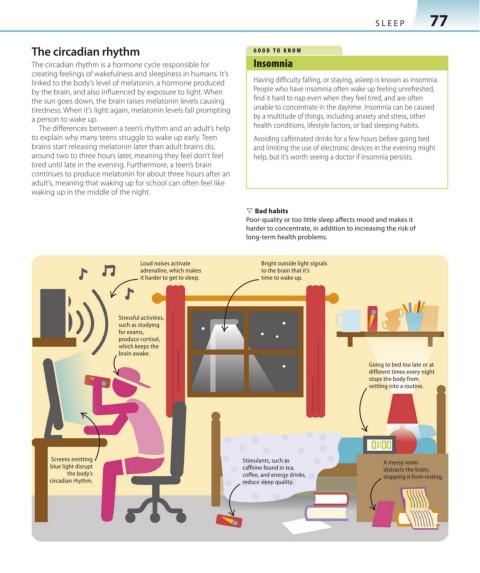
                                                          ▽ Bad habits
                                                          Poor-quality or too little sleep affects mood and makes it
                                                          harder to concentrate, in addition to increasing the risk of
                                                          long-term health problems.

                                 Loud noises activate        Bright outside light signals
                                 adrenaline, which makes     to the brain that it’s
                                 it harder to get to sleep.  time to wake up.


                            Stressful activities,
                            such as studying
                            for exams,
                            produce cortisol,
                            which keeps the
                            brain awake.
                                                                                      Going to bed too late or at
                                                                                      different times every night
                                                                                      stops the body from
                                                                                      settling into a routine.


             Screens emitting                            Stimulants, such as
            blue light disrupt                           caffeine found in tea,          A messy room
                                                                                         distracts the brain,
                the body’s                               coffee, and energy drinks,      stopping it from resting.
            circadian rhythm.                            reduce sleep quality.


   076-077_Sleep.indd   77                                                                           24/03/2017   17:16

