


Page 76 - (DK) Help Your Kids with Growing Up: A No-Nonsense Guide to Puberty and Adolescence
P. 76
74        HEALTH Y  BOD Y


        Exercise                                                           SEE ALSO
                                                                           ‹
                                                                           ‹ 68–69  Healthy eating
                                                                            70–71  Eating disorders
        Exercise is good for the body and the brain. It keeps              ‹ 72–73  Body image
        teens’ bodies healthy, improves memory and sleep quality,          Stress                 92–93   ›
        and boosts confidence.

        Being active                                                   Finding balance
        Teens should try to include some form of                       During stressful periods, such as when
        physical exercise in their day, every day. They                homework starts to pile up, finding the time
        should aim for a mix of activities throughout                  to exercise can be hard. But, in fact, exercise
        the week, at varied intensity levels, in order                 can be a great stress reliever. If setting aside
        to build muscle and bone strength and                          a chunk of time to exercise is tricky, fitting a
        maintain cardiovascular fitness.                               small amount of physical activity into the
                                                                       day can still make a difference, such as using
                                                                       the stairs instead of taking the lift.
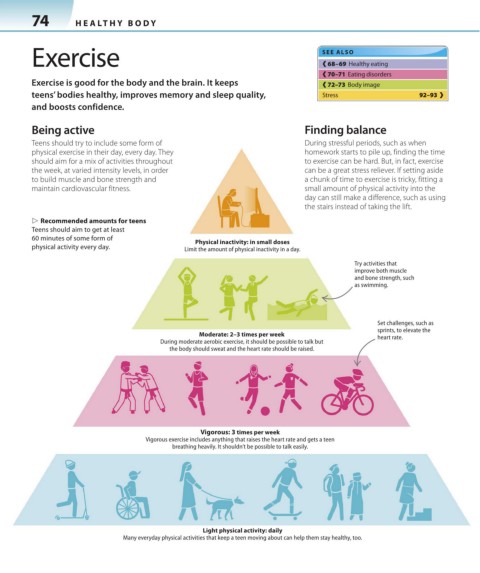
        ▷ Recommended amounts for teens
        Teens should aim to get at least
        60 minutes of some form of            Physical inactivity: in small doses
        physical activity every day.       Limit the amount of physical inactivity in a day.

                                                                                   Try activities that
                                                                                   improve both muscle
                                                                                   and bone strength, such
                                                                                   as swimming.


                                                                                        Set challenges, such as
                                                                                        sprints, to elevate the
                                               Moderate: 2–3 times per week             heart rate.
                                      During moderate aerobic exercise, it should be possible to talk but
                                        the body should sweat and the heart rate should be raised.


                                               Vigorous: 3 times per week
                                   Vigorous exercise includes anything that raises the heart rate and gets a teen
                                         breathing heavily. It shouldn’t be possible to talk easily.


                                                Light physical activity: daily
                             Many everyday physical activities that keep a teen moving about can help them stay healthy, too.


   074-075_Exercise.indd   74                                                                        30/03/2017   15:49

