


Page 87 - (DK) Help Your Kids with Growing Up: A No-Nonsense Guide to Puberty and Adolescence
P. 87
EMO TIONS         85

        Teen emotions
        Teens tend to behave more recklessly when surrounded by
        their peers than when with adults, and can be especially
        affected by social feedback, praise, and what others think
        of them. In part, this is because the part of the brain that
        regulates emotional balance, risk-taking, and self-awareness,
        the prefrontal cortex, is one of the last areas to develop. It may
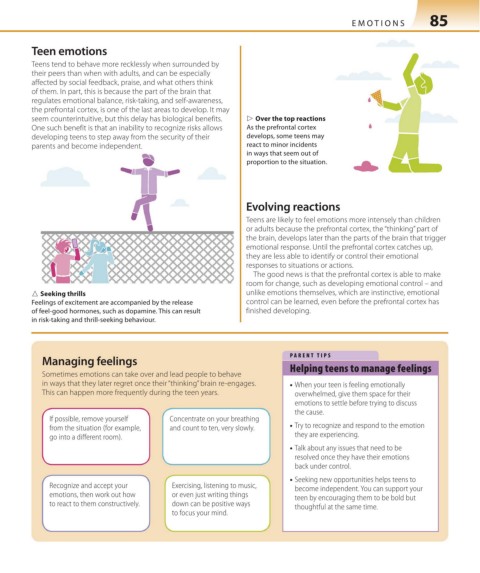
        seem counterintuitive, but this delay has biological benefits.   ▷ Over the top reactions
        One such benefit is that an inability to recognize risks allows   As the prefrontal cortex
        developing teens to step away from the security of their   develops, some teens may
        parents and become independent.                   react to minor incidents
                                                          in ways that seem out of
                                                          proportion to the situation.


                                                          Evolving reactions
                                                          Teens are likely to feel emotions more intensely than children
                                                          or adults because the prefrontal cortex, the “thinking” part of
                                                          the brain, develops later than the parts of the brain that trigger
                                                          emotional response. Until the prefrontal cortex catches up,
                                                          they are less able to identify or control their emotional
                                                          responses to situations or actions.
                                                           The good news is that the prefrontal cortex is able to make
                                                          room for change, such as developing emotional control – and
        △ Seeking thrills                                 unlike emotions themselves, which are instinctive, emotional
        Feelings of excitement are accompanied by the release    control can be learned, even before the prefrontal cortex has
        of feel-good hormones, such as dopamine. This can result    finished developing.
        in risk-taking and thrill-seeking behaviour.


           Managing feelings                                        P ARENT  TIPS
           Sometimes emotions can take over and lead people to behave    Helping teens to manage feelings
           in ways that they later regret once their “thinking” brain re-engages.    • When your teen is feeling emotionally
           This can happen more frequently during the teen years.    overwhelmed, give them space for their
                                                                     emotions to settle before trying to discuss
                                                                     the cause.
            If possible, remove yourself   Concentrate on your breathing
            from the situation (for example,   and count to ten, very slowly.  • Try to recognize and respond to the emotion
            go into a different room).                               they are experiencing.
                                                                    • Talk about any issues that need to be
                                                                     resolved once they have their emotions
                                                                     back under control.
                                                                    • Seeking new opportunities helps teens to
            Recognize and accept your    Exercising, listening to music,   become independent. You can support your
            emotions, then work out how   or even just writing things   teen by encouraging them to be bold but
            to react to them constructively.  down can be positive ways    thoughtful at the same time.
                                         to focus your mind.


   084-085_Emotions.indd   85                                                                        24/03/2017   17:16

