


Page 89 - (DK) Help Your Kids with Growing Up: A No-Nonsense Guide to Puberty and Adolescence
P. 89
C ONFIDENCE  AND  SELF-ESTEEM              87


                                                           TEEN  HINTS
                                                           Building self-esteem

                                                           Self-esteem affects almost every part of a person’s life, from their
                                                           relationships with others to academic and work performance,
                                                           and so it is essential to value yourself and give yourself the
                                                           recognition that you deserve.
                                                           • Think and say positive things to yourself, about yourself,
                                                             every day.
                                                           • Don’t say mean things to yourself – treat yourself like you
                           “The fact that I’m me             would your best friend, with kindness and respect.
                           and no one else is one          • Accept compliments from other people.
                           of my greatest assets.”         • Each day, write down three things you accomplished.

                           Haruki Murakami

                                                           P ARENT  TIPS
                                                           Leading by example
        Self-esteem
        Self-esteem relates to the way that people feel about   There are steps that parents can take to help boost their
        themselves. It’s their inner sense of their own importance, value   teens’ self-esteem.
        and worth. Confidence is specific to an aspect of a person’s life,   • Let your teen hear you congratulate yourself when you
        and it’s okay not to be confident in everything – but to have   do something well, and say good things about yourself.
        low self-esteem affects more than a person’s goals and abilities:
        it affects their mental health.                    • Highlight and repeat your teen’s qualities and achievements.
          People with low self-esteem are extremely critical of   • Encourage resilience by talking about your own challenges
        themselves, and this constant stream of negative thoughts    with self-esteem. This will help them realize that we all
        can lead to anxiety or depression. The good news is that   struggle with self-esteem from time to time.
        people can choose what to think and say about themselves,
        and so can kick the negative thoughts, and replace them with
        positive opinions that are kind and affirmative.


        Shyness
        Shyness is when people feel uncertain or awkward
        during social encounters, especially with new people.
        It can influence how they behave or feel around others,
        and make them uncomfortable, self-conscious, or
        nervous. Shyness can also lead to physical responses,
        such as blushing, sweating, breathlessness, or being
        unable to speak.
          Shyness is quite common, but it isn’t a problem unless
        it causes a person emotional pain and stops them from
        achieving their full potential. If this occurs, it is advisable
        to talk to friends and family, or to see a counsellor.
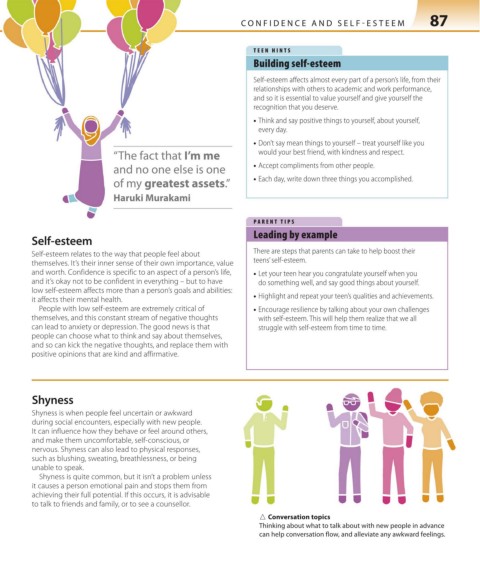
                                                             △ Conversation topics
                                                             Thinking about what to talk about with new people in advance
                                                             can help conversation flow, and alleviate any awkward feelings.


   086-087_Confidence_self-esteem.indd   87                                                          24/03/2017   17:16

