


Page 179 - Atlas Of The World's Strangest Animals
P. 179
GREAT DIVING BEETLE             179


             just superb swimmers, they’re equally at home beneath
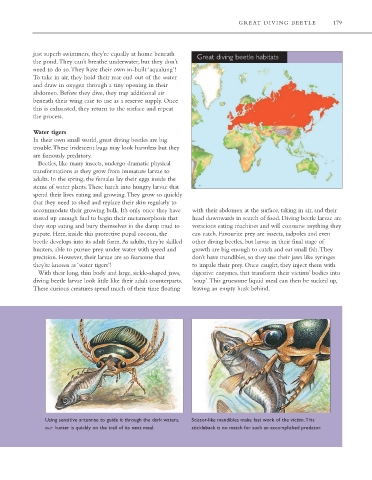
                                                                     Great diving beetle habitats
             the pond.They can’t breathe underwater, but they don’t
             need to do so.They have their own in-built ‘aqualung’!
             To take in air, they hold their rear end out of the water
             and draw in oxygen through a tiny opening in their
             abdomen. Before they dive, they trap additional air
             beneath their wing case to use as a reserve supply. Once
             this is exhausted, they return to the surface and repeat
             the process.

             Water tigers
             In their own small world, great diving beetles are big
             trouble.These iridescent bugs may look harmless but they
             are famously predatory.
              Beetles, like many insects, undergo dramatic physical
             transformations as they grow from immature larvae to
             adults. In the spring, the females lay their eggs inside the
             stems of water plants.These hatch into hungry larvae that
             spend their lives eating and growing.They grow so quickly
             that they need to shed and replace their skin regularly to
             accommodate their growing bulk. It’s only once they have  with their abdomen at the surface, taking in air, and their
             stored up enough fuel to begin their metamorphosis that  head downwards in search of food. Diving beetle larvae are
             they stop eating and bury themselves in the damp mud to  voracious eating machines and will consume anything they
             pupate. Here, inside this protective pupal cocoon, the  can catch. Favourite prey are insects, tadpoles and even
             beetle develops into its adult form.As adults, they’re skilled  other diving beetles, but larvae in their final stage of
             hunters, able to pursue prey under water with speed and  growth are big enough to catch and eat small fish.They
             precision. However, their larvae are so fearsome that  don’t have mandibles, so they use their jaws like syringes
             they’re known as ‘water tigers’!                       to impale their prey. Once caught, they inject them with
              With their long, thin body and large, sickle-shaped jaws,  digestive enzymes, that transform their victims’ bodies into
             diving beetle larvae look little like their adult counterparts.  ‘soup’.This gruesome liquid meal can then be sucked up,
             These curious creatures spend much of their time floating  leaving an empty husk behind.


                 Using sensitive antennae to guide it through the dark waters,  Scissor-like mandibles make fast work of the victim.This
                 our hunter is quickly on the trail of its next meal.  stickleback is no match for such an accomplished predator.


                                             (c) 2011 Marshall Cavendish. All Rights Reserved.

