


Page 115 - (DK Eyewitness) Travel Guide - Japan
P. 115
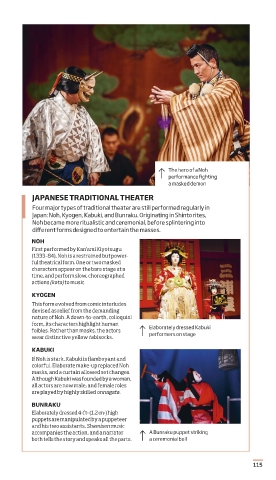
The hero of a Noh
performance fighting
a masked demon
JAPANESE TRADITIONAL THEATER
Four major types of traditional theater are still performed regularly in
Japan: Noh, Kyogen, Kabuki, and Bunraku. Originating in Shinto rites,
Noh became more ritualistic and ceremonial, before splintering into
different forms designed to entertain the masses.
NOH
First performed by Kan’ami Kiyotsugu
(1333–84), Noh is a restrained but power
ful theatrical form. One or two masked
characters appear on the bare stage at a
time, and perform slow, choreo graphed
actions (kata) to music.
KYOGEN
This form evolved from comic interludes
devised as relief from the demanding
nature of Noh. A downtoearth, collo quial
form, its characters highlight human Elaborately dressed Kabuki
foibles. Rather than masks, the actors performers on stage
wear distinctive yellow tabi socks.
KABUKI
If Noh is stark, Kabuki is flamboyant and
colorful. Elaborate makeup replaced Noh
masks, and a curtain allowed set changes.
Although Kabuki was founded by a woman,
all actors are now male, and female roles
are played by highly skilled onnagata.
BUNRAKU
Elaborately dressed 4ft (1.2m) high
puppets are manipulated by a puppeteer
and his two assistants. Shamisen music
accompanies the action, and a nar rator A Bunraku puppet striking
both tells the story and speaks all the parts. a ceremonial bell
115
114-115_EW_Japan.indd 115 04/02/2019 14:54

