


Page 191 - (DK Eyewitness) Travel Guide - Japan
P. 191
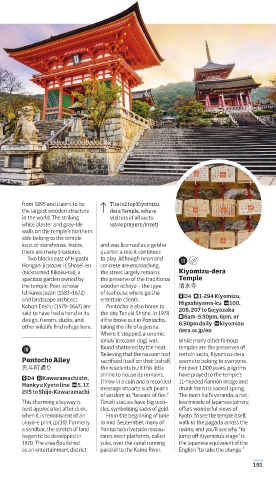
from 1895 and claims to be The hilltop Kiyomizu-
the largest wood en structure dera Temple, where
in the world. The striking visitors of all sects
white plaster and gray-tile leave prayers (inset)
walls on the temple’s northern
side belong to the temple
kura, or storehouse. Inside, and was licensed as a geisha
there are many treasures. quarter, a role it continues
Two blocks east of Higashi to play. Although neon and
Hongan-ji proper is Shosei-en concrete are encroaching, 11 "
(nicknamed Kikoku-tei), a the street largely remains Kiyomizu-dera
spacious garden owned by the preserve of the traditional Temple
the temple. Poet-scholar wooden ochaya – the type 清水寺
Ishikawa Jozan (1583–1672) of teahouse where geisha D4 ⌂ 1-294 Kiyomizu,
and landscape architect entertain clients.
Kobori Enshu (1579–1647) are Pontocho is also home to Higashiyama-ku @ 100,
206, 207 to Gojyozaka
said to have had a hand in its the tiny Tanuki Shrine. In 1978 # 6am–5:30pm, 6pm, or
design. Herons, ducks, and a fire broke out in Pontocho, 6:30pm daily ∑ kiyomizu
other wildlife find refuge here. taking the life of a geisha.
Where it stopped, a ceramic dera.or.jp/en
tanuki (raccoon dog) was While many other famous
10 found shat tered by the heat. temples are the preserves of
Believing that the raccoon had
certain sects, Kiyomizu-dera
Pontocho Alley sacrificed itself on their behalf, seems to belong to everyone.
先斗町通り the residents built this little For over 1,000 years, pilgrims
shrine to house its remains. have prayed to the temple’s
D4 £ Kawaramachi stn, Throw in a coin and a recorded 11-headed Kannon image and
Hankyu Kyoto line @ 5, 17, mes sage imparts such pearls drunk from its sacred spring.
205 to Shijo-Kawaramachi
of wisdom as “beware of fire.” The main hall’s veranda, a nail-
This charming alleyway is Tanuki statues have big testi- less miracle of Japanese joinery,
best appreciated after dusk, cles, symbolising sacks of gold. offers wonderful views of
when it is reminiscent of an From the beginning of June Kyoto. To see the temple itself,
ukiyo-e print (p130). For merly to mid-September, many of walk to the pagoda across the
a sandbar, the stretch of land Pontocho’s riverside restau- ravine, and you’ll see why “to
began to be developed in rants erect platforms, called jump off Kiyomizu’s stage” is
1670. The area flourished yuka, over the canal running the Japanese equivalent of the
as an entertainment district parallel to the Kamo River. English “to take the plunge.”
191
190-191_EW_Japan.indd 191 04/02/2019 15:57

