


Page 187 - (DK Eyewitness) Travel Guide - Ireland
P. 187
IRELAND REGION B Y REGION 185
THE LOWER SHANNON
Clare • Limerick • Tipperary
In the three counties which flank the lower reaches of the
Shannon, Ireland’s longest river, the scenery ranges from the
rolling farm land of Tipperary to the eerie limestone plateau
of the Burren. The Shannon’s bustling riverside resorts draw
many visitors, and there are medieval strongholds and
atmospheric towns of great historic interest. The region
also boasts a vibrant music scene.
The River Shannon has long made this Ormonde, who held much land in
area an attractive prospect for settlers. Tipperary, and the Fitzgeralds, the main
There are several important Stone Age land owners in the Limerick area. From
sites, including a major settlement by the Middle Ages, Limerick was often at the
Lough Gur. From the 5th century, the centre of events in the Lower Shannon.
region lay at the heart of Munster, one of In 1691, the army of William of Orange
Ireland’s four Celtic provinces. The Rock of laid siege to the town, heralding the Treaty
Cashel, a remarkable fortified abbey in of Limerick that triggered the Catholic
county Tipperary, was the seat of the nobility’s departure for Europe – the
Kings of Munster for more than 700 years. so-called “Flight of the Wild Geese”.
The Vikings penetrated the Shannon in Lush grassland, which has turned the
the 10th century, but Gaelic clans put up Lower Shannon into prime dairy coun try,
stern resistance. During the Norman is typical of the region. In places this gives
period, the chieftains of these clans built way to picturesque glens and mountains,
Bunratty Castle and other fortresses that such as the Galty range in southern
were impressive enough to rival the Tipperary. The region’s most dramatic
strongholds erected by the Anglo-Irish scenery, however, is found along the coast
dynasties. Foremost among the latter of Clare, a county otherwise best known
families were the Butlers, the Earls of for its thriving traditional music scene.
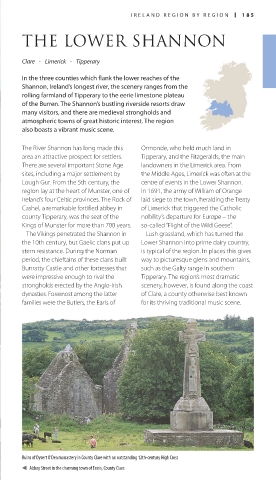
Ruins of Dysert O’Dea monastery in County Clare with an outstanding 12th-century High Cross
Abbey Street in the charming town of Ennis, County Clare
184-185_EW_Ireland.indd 185 08/03/17 11:43 am

