


Page 25 - (DK Eyewitness) Travel Guide - Ireland
P. 25
A POR TR AIT OF IRELAND 23
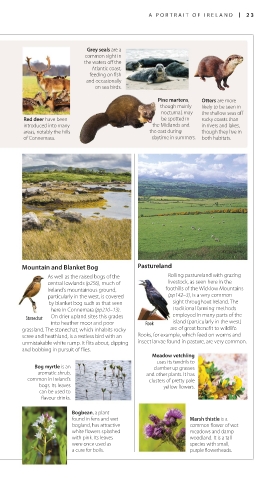
Grey seals are a
common sight in
the waters off the
Atlantic coast,
feeding on fish
and occasionally
on sea birds.
Pine martens, Otters are more
though mainly likely to be seen in
nocturnal, may the shallow seas off
Red deer have been be spotted in rocky coasts than
introduced into many the Midlands and in rivers and lakes,
areas, notably the hills the east during though they live in
of Connemara. daytime in summers. both habitats.
Mountain and Blanket Bog Pastureland
As well as the raised bogs of the Rolling pastureland with grazing
central lowlands (p256), much of livestock, as seen here in the
Ireland’s mountainous ground, foot hills of the Wicklow Mountains
particularly in the west, is covered (pp142–3), is a very common
by blanket bog such as that seen sight throughout Ireland. The
here in Connemara (pp210–13). traditional farming methods
Stonechat On drier upland sites this grades employed in many parts of the
into heather moor and poor Rook island (particularly in the west)
grassl and. The stonechat, which inhabits rocky are of great benefit to wildlife.
scree and heathland, is a restless bird with an Rooks, for example, which feed on worms and
unmistakable white rump. It flits about, dipping insect larvae found in pasture, are very common.
and bobbing in pursuit of flies.
Meadow vetchling
uses its tendrils to
Bog myrtle is an clamber up grasses
aromatic shrub, and other plants. It has
common in Ireland’s clusters of pretty pale
bogs. Its leaves yellow flowers.
can be used to
flavour drinks.
Bogbean, a plant
found in fens and wet Marsh thistle is a
bogland, has attractive common flower of wet
white flowers splashed meadows and damp
with pink. Its leaves woodland. It is a tall
were once used as species with small,
a cure for boils. purple flowerheads.
022-023_EW_Ireland.indd 23 08/03/17 11:42 am

