


Page 103 - BBC Wildlife Volume 36 #11
P. 103
OURWILD WORLD
3 questions on
ORNITHOLOGY
What makes a FUNGI
raptor a raptor? HOW MANY FUNGI EXIST?
There are about 144,000 named
The term ‘raptor’, interchangeable species of fungi, but it is estimated
A with ‘bird of prey’, refers to an avian that there may be between 2.2 and
species that hunts other higher vertebrates 3.8 million species in existence. This
(reptiles, birds and mammals). The name means that more than 93 per
is applied to kites, vultures, harriers, cent of fungi are still
hawks, buzzards, falcons and eagles, plus unknown to science.
the secretary bird (owls are not technically In 2017, 2,189 new
raptors). Not all of the species covered by species were
the term are related taxonomically, so in a described, one of
sense ‘raptor’ describes a certain predatory which is the bizarre
lifestyle and the physical characteristics Amphichorda
associated with it – predominantly the guana (right). It was
hooked beak and sharp talons. discovered in a cave
Globally, there are some 350 species of in China and subsists
diurnal raptor, divided into roughly on bat guano.
80 genera within five families and
two sub-families. Particularly
interesting is the way in which TO WHAT EXTENT DO PLANTS
raptor characteristics have AND FUNGI INTERACT?
evolved independently Some 90 per cent of plant species
within different families to are thought to interact with fungi via
produce similar-looking their roots, with each helping the
birds, underlining the other to grow. Mycorrhizal fungi are
importance of these symbiotic and live in the soil and
features for hunting. among plant roots. They exchange
Mike Toms nutrie ts with plants, allowing them
to access increased
quantities of
nitrogen and
phosphorous in the
soil. Making use of
these fungi has Kestrel: Andy Rouse/naturepl.com; fungi: Z.F. Zhang and L. Cai; wheat: Peter Righteous/Alamy; heather: MYN/Niall Benvie/NPL
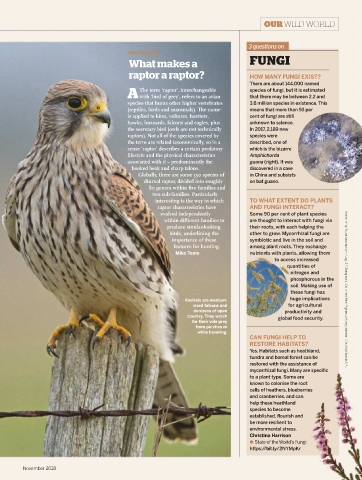
Kestrels are medium- huge implications
sized falcons and for agricultural
denizens of open productivity and
country. They watch global food security.
for their vole prey
from perches or
while hovering.
CAN FUNGI HELP TO
RESTORE HABITATS?
Yes. Habitats such as heathland,
tundra and boreal forest can be
restored with the assistance of
mycorrhizal fungi. Many are specific
to a plant type. Some are
known to colonise the root
cells of heathers, blueberries
and cranberries, and can
help these heathland
species to become
established, flourish and
be more resilient to
environmental stress.
Christina Harrison
O State of theWorld’s Fungi:
https://bit.ly/2NYMpKr
November 2018

