


Page 6 - BBC Wildlife Volume 36 #11
P. 6
WILDMONTH


                    Seven essential wildlife events to enjoy this


                                  month, compiled by Ben Hoare.


             1 | ATLANTIC OAKWOODS

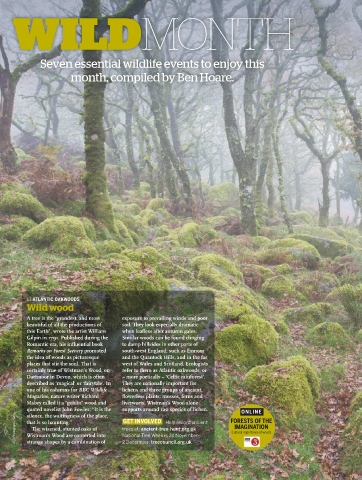
             Wild wood

             A tree is the “grandest, and most           exposure to prevailing winds and poor
             beautiful of all the productions of         soil. They look especially dramatic
             this Earth”, wrote the artist William       when leafless after autumn gales.
             Gilpin in 1791. Published during the        Similar woods can be found clinging
             Romantic era, his influential book           to damp hillsides in other parts of
             Remarks on Forest Scenery promoted          south-west England, such as Exmoor
             the idea of woods as picturesque            and the Quantock Hills, and in the far
             places that stir the soul. That is          west of Wales and Scotland. Ecologists
             certainly true of Wistman’s Wood, on        refer to them as Atlantic oakwoods, or
             Dartmoor in Devon, which is often           – more poetically – ‘Celtic rainforest’.
             described as ‘magical’ or ‘fairytale’. In   They are nationally important for
             one of his columns for BBC Wildlife         lichens and three groups of ancient,
             Magazine, nature writer Richard             flowerless plants: mosses, ferns and
             Mabey called it a “goblin” wood and         liverworts. Wistman’s Wood alone
             quoted novelist John Fowles: “It is the     supports around 120 species of lichen.                 ONLINE
        ASC Photography/Getty  that is so haunting.”     trees at: ancient-tree-hunt.org.uk                FORESTS OF THE
             silence, the waitingness of the place,
                                                          GET INVOLVED Help record ancient
                                                                                                             IMAGINATION
                The wizened, stunted oaks of
                                                                                                            Cultural importance of woods
             Wistman’s Wood are contorted into
                                                         National Tree Week is 24 November–
             strange shapes by a combination of
                                                         2 December: treecouncil.org.uk

