


Page 412 - (DK Eyewitness) Travel Guide - Europe
P. 412
410 IT AL Y AND GREECE
remarkable stained-glass
windows, bas-reliefs, and a
medieval treasury. More religious
artifacts can be seen in the
Museo del Duomo located in
the Palazzo Reale.
An ornate shopping arcade
completed in 1878, the Galleria
Vittorio Emanuele II links the
Piazza del Duomo with the
Piazza della Scala. It boasts a
superb metal and glass roof
crowned with a central dome,
has mosaic floors, and houses
stylish shops and restaurants.
The Neo-Classical Teatro alla
Scala opened in 1778 and is
among the most prestigious
opera houses in the world. Its
stage is one of the largest in
Europe. The adjoining Museo
Teatrale displays past sets and
costumes and offers a glimpse
of the auditorium.
The Castello Sforzesco, a
symbol of Milan, was initially
the palace of the Visconti family.
Francesco Sforza, who became
lord of Milan in 1450, embellished
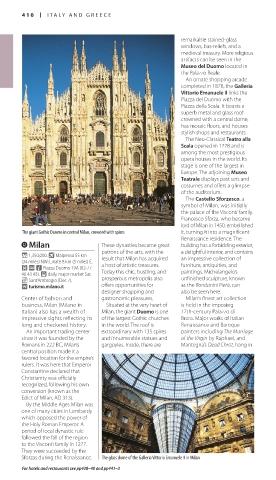
The giant Gothic Duomo in central Milan, crowned with spires it, turning it into a magnificent
Renaissance residence. The
w Milan These dynasties became great building has a forbidding exterior,
patrons of the arts, with the a delightful interior, and contains
* 1,350,000. k Malpensa 55 km
(34 miles) NW; Linate 8 km (5 miles) E. result that Milan has acquired an impressive collection of
£ @ n Piazza Duomo 19A (02-77 a host of artistic treasures. furniture, antiquities, and
40 43 43). ( daily, major market Sat. Today this chic, bustling, and paintings. Michelangelo’s
_ Sant’Ambrogio (Dec 7). prosperous metropolis also unfinished sculpture, known
∑ turismo.milano.it offers opportunities for as the Rondanini Pietà, can
designer shopping and also be seen here.
Center of fashion and gastronomic pleasures. Milan’s finest art collection
business, Milan (Milano in Situated at the very heart of is held in the imposing
Italian) also has a wealth of Milan, the giant Duomo is one 17th-century Palazzo di
impressive sights reflecting its of the largest Gothic churches Brera. Major works of Italian
long and checkered history. in the world. The roof is Renaissance and Baroque
An important trading center extraordinary with 135 spires painters including The Marriage
since it was founded by the and innumerable statues and of the Virgin by Raphael, and
Romans in 222 BC, Milan’s gargoyles. Inside, there are Mantegna’s Dead Christ, hang in
central position made it a
favored location for the empire’s
rulers. It was here that Emperor
Constantine declared that
Christianity was officially
recognized, following his own
conversion (known as the
Edict of Milan, AD 313).
By the Middle Ages Milan was
one of many cities in Lombardy
which opposed the power of
the Holy Roman Emperor. A
period of local dynastic rule
followed the fall of the region
to the Visconti family in 1277.
They were succeeded by the
Sforzas during the Renaissance. The glass dome of the Galleria Vittorio Emanuele II in Milan
For hotels and restaurants see pp438–40 and pp441–3
410-411_EW_Europe.indd 410 14/07/16 10:10 am

