


Page 120 - (DK Eyewitness) Travel Guide - The Netherlands
P. 120
118 A MSTERD A M
y Rembrandtplein
Map 5 A2. v 4, 9, 14.
Formerly called the Botermarkt,
after the butter market held
here until the mid-19th century,
this square acquired its present
name when the statue of
Rembrandt was erected in 1876.
Soon afterwards,
Rembrandtplein developed into
a centre for nightlife with the
opening of various hotels and
cafés. The Mast (renamed the
Mille Colonnes Hotel) dates
from 1889, and the Schiller
Karena hotel and the Café
Schiller both opened in 1892.
De Kroon, which epitomizes a
typical grand café, dates from
1898. The popularity of
Rembrandtplein has endured,
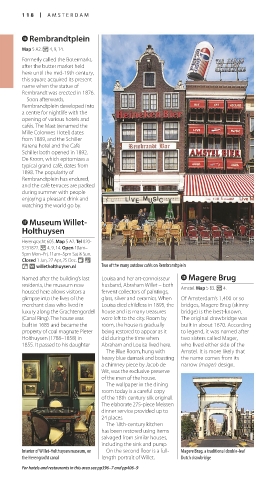
and the café terraces are packed
during summer with people
enjoying a pleasant drink and
watching the world go by.
u Museum Willet-
Holthuysen
Herengracht 605. Map 5 A2. Tel 020-
5231822. v 4, 9, 14. Open 10am–
5pm Mon–Fri, 11am–5pm Sat & Sun.
Closed 1 Jan, 27 Apr, 25 Dec. 8 &
= ∑ willetholthuysen.nl Two of the many outdoor cafés on Rembrandtplein
Named after the building’s last Louisa and her art-connoisseur i Magere Brug
residents, the museum now husband, Abraham Willet – both Amstel. Map 5 B3. v 4.
housed here allows visitors a fervent collectors of paintings,
glimpse into the lives of the glass, silver and ceramics. When Of Amsterdam’s 1,400 or so
merchant class who lived in Louisa died childless in 1895, the bridges, Magere Brug (skinny
luxury along the Grachtengordel house and its many treasures bridge) is the best-known.
(Canal Ring). The house was were left to the city. Room by The original drawbridge was
built in 1685 and became the room, the house is gradually built in about 1670. According
property of coal magnate Pieter being restored to appear as it to legend, it was named after
Holt huysen (1788–1858) in did during the time when two sisters called Mager,
1855. It passed to his daughter Abraham and Louisa lived here. who lived either side of the
The Blue Room, hung with Amstel. It is more likely that
heavy blue damask and boasting the name comes from its
a chimney piece by Jacob de narrow (mager) design.
Wit, was the exclusive preserve
of the men of the house.
The wallpaper in the dining
room today is a careful copy
of the 18th-century silk original.
The elaborate 275-piece Meissen
dinner service provided up to
24 places.
The 18th-century kitchen
has been restored using items
salvaged from similar houses,
including the sink and pump.
Interior of Willet-Holthuysen museum, on On the second floor is a full- Magere Brug, a traditional double-leaf
the Herengracht canal length portrait of Willet. Dutch drawbridge
For hotels and restaurants in this area see pp396–7 and pp406–9
118-119_EW_Netherlands.indd 118 16/01/17 12:03 pm
Eyewitness Travel LAYERS PRINTED:
Catalogue template “UK” LAYER
(Source v2.4)
Date 25th April 2013
Size 125mm x 217mm

