


Page 243 - The Complete Cat Breed Book (DK)
P. 243
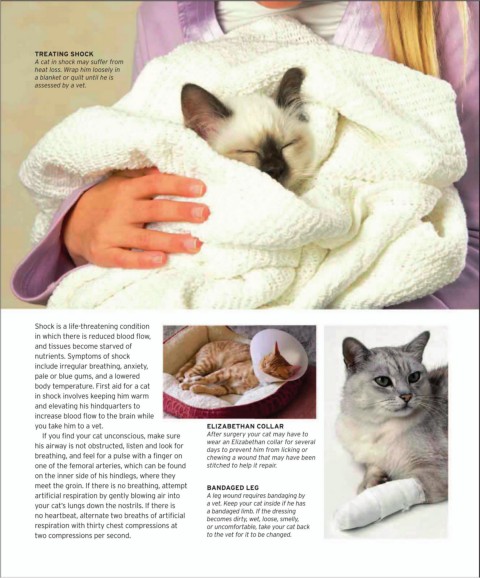
TREATING SHOCK
         A cat in shock may suffer from
         heat loss. Wrap him loosely in
         a blanket or quilt until he is
         assessed by a vet.


         Shock is a life-threatening condition
         in which there is reduced blood flow,
         and tissues become starved of
         nutrients. Symptoms of shock
         include irregular breathing, anxiety,
         pale or blue gums, and a lowered
         body temperature. First aid for a cat
         in shock involves keeping him warm
         and elevating his hindquarters to
         increase blood flow to the brain while
         you take him to a vet.                  ELIZABETHAN COLLAR
           If you find your cat unconscious, make sure    After surgery your cat may have to
                                                 wear an Elizabethan collar for several
         his airway is not obstructed, listen and look for
                                                 days to prevent him from licking or
         breathing, and feel for a pulse with a finger on   chewing a wound that may have been
         one of the femoral arteries, which can be found   stitched to help it repair.
         on the inner side of his hindlegs, where they
         meet the groin. If there is no breathing, attempt   BANDAGED LEG
         artificial respiration by gently blowing air into   A leg wound requires bandaging by
         your cat’s lungs down the nostrils. If there is    a vet. Keep your cat inside if he has
                                                 a bandaged limb. If the dressing
         no heartbeat, alternate two breaths of artificial
                                                 becomes dirty, wet, loose, smelly,
         respiration with thirty chest compressions at    or uncomfortable, take your cat back
         two compressions per second.            to the vet for it to be changed.

