


Page 533 - (DK Eyewitness) Travel Guide - France
P. 533
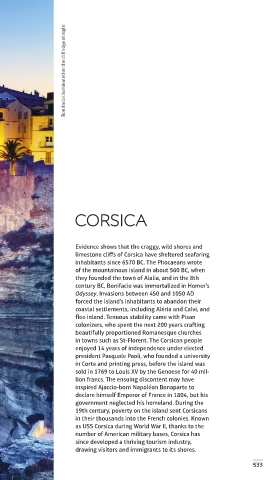
Bonifacio illuminated on the cliff edge at night


                     CORSICA


                    Evidence shows that the craggy, wild shores and
                    limestone cliffs of Corsica have sheltered seafaring
                    inhabitants since 6570 BC. The Phocaeans wrote
                    of the mountainous island in about 560 BC, when
                    they founded the town of Alalia, and in the 8th
                    century BC, Bonifacio was immortalized in Homer’s
                    Odyssey. Invasions between 450 and 1050 AD
                    forced the island’s inhabitants to abandon their
                    coastal settlements, including Aléria and Calvi, and
                    flee inland. Tenuous stability came with Pisan
                    colonizers, who spent the next 200 years crafting
                    beautifully proportioned Romanesque churches
                    in towns such as St-Florent. The Corsican people
                    enjoyed 14 years of independence under elected
                    president Pasquale Paoli, who founded a university
                    in Corte and printing press, before the island was
                    sold in 1769 to Louis XV by the Genoese for 40 mil-
                    lion francs. The ensuing discontent may have
                    inspired Ajaccio-born Napoléon Bonaparte to
                    declare himself Emperor of France in 1804, but his
                    government neglected his homeland. During the
                    19th century, poverty on the island sent Corsicans
                    in their thousands into the French colonies. Known
                    as USS Corsica during World War II, thanks to the
                    number of American military bases, Corsica has
                    since developed a thriving tourism industry,
                    drawing visitors and immigrants to its shores.
                                                                  533


   532-533_EW_France.indd   533                              29/01/2019   15:54

