


Page 53 - (DK Eyewitness) Travel Guide - Southwest USA & National Parks
P. 53
THE HIST OR Y OF THE SOUTHWEST 51
The Demand for Water
As the region’s population expanded, water
supply became a pressing issue, and a
series of enormous, federally funded dams
were built to channel precious water for the
burgeoning population of such cities as
Phoenix. Dam- and road-building projects
aided the region’s economy and attracted
even more settlers.
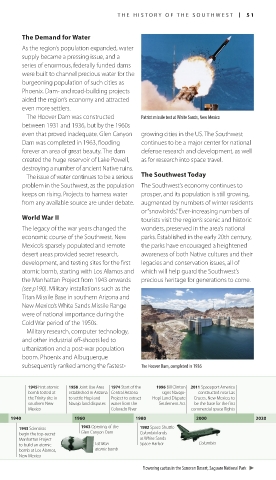
The Hoover Dam was constructed Patriot missile test at White Sands, New Mexico
between 1931 and 1936, but by the 1960s
even that proved inadequate. Glen Canyon growing cities in the US. The Southwest
Dam was completed in 1963, flooding continues to be a major center for national
forever an area of great beauty. The dam defense research and development, as well
created the huge reservoir of Lake Powell, as for research into space travel.
destroying a number of ancient Native ruins.
The issue of water continues to be a serious The Southwest Today
problem in the Southwest, as the population The Southwest’s economy continues to
keeps on rising. Projects to harness water prosper, and its population is still growing,
from any available source are under debate. augmented by numbers of winter residents
or “snowbirds.” Ever-increasing numbers of
World War II tourists visit the region’s scenic and historic
The legacy of the war years changed the wonders, preserved in the area’s national
economic course of the Southwest. New parks. Established in the early 20th century,
Mexico’s sparsely populated and remote the parks have encouraged a heightened
desert areas provided secret research, awareness of both Native cultures and their
development, and testing sites for the first legacies and conservation issues, all of
atomic bomb, starting with Los Alamos and which will help guard the Southwest’s
the Manhattan Project from 1943 onwards precious heritage for generations to come.
(see p190). Military installations such as the
Titan Missile Base in southern Arizona and
New Mexico’s White Sands Missile Range
were of national importance during the
Cold War period of the 1950s.
Military research, computer technology,
and other industrial off-shoots led to
urbanization and a post-war population
boom. Phoenix and Albuquerque
subsequently ranked among the fastest- The Hoover Dam, completed in 1936
1945 First atomic 1958 Joint Use Area 1974 Start of the 1996 Bill Clinton 2011 Spaceport America
bomb tested at established in Arizona Central Arizona signs Navajo- constructed near Las
the Trinity site in to settle Hopi and Project to extract Hopi Land Dispute Cruces, New Mexico, to
southern New Navajo land disputes water from the Settlement Act be the base for the first
Mexico Colorado River commercial space flights
1940 1960 1980 2000 2020
1943 Scientists 1963 Opening of the 1982 Space Shuttle
begin the top-secret Glen Canyon Dam Columbia lands
Manhattan Project at White Sands
to build an atomic Fat Man Space Harbor Columbia
bomb at Los Alamos, atomic bomb
New Mexico
Flowering cactus in the Sonoran Desert, Saguaro National Park
050-051_EW_SW_USA.indd 51 28/11/17 12:39 PM

