


Page 31 - (DK Eyewitness) Travel Guide - Tokyo
P. 31
THE HIST OR Y OF JAP AN 29
the Japanese economy. Industrial
production surged as the average
household wanted to own a TV, washing
machine, and refrigerator.
In 1960, protests against the ratification of
the US-Japan Security Treaty rocked Japan.
The prime minister resigned. His successors
focused on economic growth. By the time
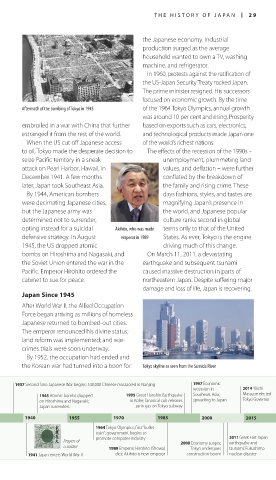
Aftermath of the bombing of Tokyo in 1945 of the 1964 Tokyo Olympics, annual growth
was around 10 per cent and rising. Prosperity
embroiled in a war with China that further based on exports such as cars, electronics,
estranged it from the rest of the world. and technological products made Japan one
When the US cut off Japanese access of the world’s richest nations.
to oil, Tokyo made the desperate decision to The effects of the recession of the 1990s –
seize Pacific territory in a sneak unemployment, plummeting land
attack on Pearl Harbor, Hawaii, in values, and deflation – were further
December 1941. A few months conflated by the breakdown of
later, Japan took Southeast Asia. the family and rising crime. These
By 1944, American bombers days fashions, styles, and tastes are
were decimating Japanese cities, magnifying Japan’s presence in
but the Japanese army was the world, and Japanese popular
determined not to surrender, culture ranks second in global
opting instead for a suicidal Akihito, who was made terms only to that of the United
defensive strategy. In August emperor in 1989 States. As ever, Tokyo is the engine
1945, the US dropped atomic driving much of this change.
bombs on Hiroshima and Nagasaki, and On March 11, 2011, a devastating
the Soviet Union entered the war in the earthquake and subsequent tsunami
Pacific. Emperor Hirohito ordered the caused massive destruction in parts of
cabinet to sue for peace. northeastern Japan. Despite suffering major
damage and loss of life, Japan is recovering.
Japan Since 1945
After World War II, the Allied Occupation
Force began arriving as millions of homeless
Japanese returned to bombed-out cities.
The emperor renounced his divine status;
land reform was implemented; and war-
crimes trials were soon underway.
By 1952, the occupation had ended and
the Korean war had turned into a boon for Tokyo skyline as seen from the Sumida River
1937 Second Sino-Japanese War begins; 140,000 Chinese massacred in Nanjing 1997 Economic
recession in 2014 Yōichi
1945 Atomic bombs dropped 1995 Great Hanshin Earthquake Southeast Asia, Masuzoe elected
on Hiroshima and Nagasaki; in Kobe; fanatical cult releases spreading to Japan Tokyo Governor
Japan surrenders sarin gas on Tokyo subway
1925 1940 1955 1970 1985 2000 2015
1964 Tokyo Olympics; first “bullet
train”; government begins to
promote computer industry 2011 Great East Japan
Prayers of 2008 Economy surges; earthquake and
a soldier
1923 Great Kanto 1989 Emperor Hirohito (Showa) Tokyo undergoes tsunami; Fukushima
Earthquake 1941 Japan enters World War II dies; Akihito is new emperor construction boom nuclear disaster
028-029_EW_Tokyo.indd 29 12/09/16 11:23 am

