


Page 27 - (DK Eyewitness) Travel Guide - Tokyo
P. 27
THE HIST OR Y OF JAP AN 25
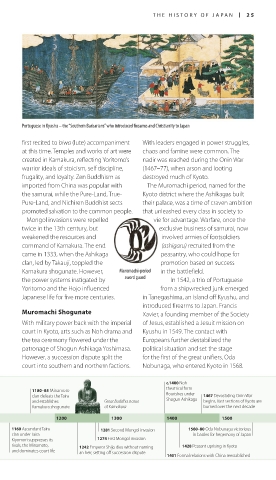
Portuguese in Kyushu – the “Southern Barbarians” who introduced firearms and Christianity to Japan
first recited to biwa (lute) accompaniment With leaders engaged in power struggles,
at this time. Temples and works of art were chaos and famine were common. The
created in Kamakura, reflecting Yoritomo’s nadir was reached during the Onin War
warrior ideals of stoicism, self discipline, (1467–77), when arson and loot ing
frugality, and loyalty. Zen Buddhism as destroyed much of Kyoto.
imported from China was popular with The Muromachi period, named for the
the samurai, while the Pure-Land, True- Kyoto district where the Ashikagas built
Pure-Land, and Nichiren Buddhist sects their palace, was a time of craven ambition
promoted salvation to the common people. that unleashed every class in society to
Mongol invasions were repelled vie for advantage. Warfare, once the
twice in the 13th century, but exclusive business of samurai, now
weakened the resources and involved armies of footsoldiers
command of Kamakura. The end (ashigaru) recruited from the
came in 1333, when the Ashikaga peasantry, who could hope for
clan, led by Takauji, toppled the promotion based on success
Kamakura shogunate. How ever, Muromachi-period in the battlefield.
the power systems instigated by sword guard In 1542, a trio of Portuguese
Yoritomo and the Hojo influenced from a shipwrecked junk emerged
Japanese life for five more centuries. in Tanegashima, an island off Kyushu, and
introduced firearms to Japan. Francis
Muromachi Shogunate Xavier, a founding mem ber of the Society
With military power back with the imperial of Jesus, established a Jesuit mission on
court in Kyoto, arts such as Noh drama and Kyushu in 1549. The contact with
the tea ceremony flowered under the Europeans further destabilized the
patronage of Sho gun Ashikaga Yoshimasa. political situation and set the stage
However, a succession dispute split the for the first of the great unifiers, Oda
court into southern and northern factions. Nobunaga, who entered Kyoto in 1568.
c.1400 Noh
1180–85 Minamoto theatrical form
clan defeats the Taira flourishes under 1467 Devastating Onin War
and establishes Great Buddha statue Shogun Ashikaga begins. Vast sections of Kyoto are
Kamakura shogunate at Kamakura burned over the next decade
1100 1200 1300 1400 1500
1160 Ascendant Taira 1281 Second Mongol invasion 1560–80 Oda Nobunaga victorious
clan under Taira in battles for hegemony of Japan
Kiyomori suppresses its 1274 First Mongol invasion
rivals, the Minamoto, 1242 Emperor Shijo dies without naming 1428 Peasant uprising in Kyoto
and dominates court life an heir, setting off succession dispute
1401 Formal relations with China reestablished
024-025_EW_Tokyo.indd 25 12/09/16 11:27 am

