


Page 14 - World of Animals - Issue #28 Magazine
P. 14
Harp seal

            Going the distance


            Harp seals migrate with the seasons and steer by the stars

            The harp seal is one of 19 species of ‘true seal’. This marine   receding ice pack. Harp seals’ main territory is the open ocean,
            mammal belongs to a group of animals known as pinnipeds   with little in the way of landmarks, so how they manage to pick

            (meaning fin-footed) and is the most abundant seal species in   out their routes with such accuracy baffled scientists for a long

            the Northern Hemisphere. The Latin name for the harp seal,   time. It is now accepted that seals use their large bulging eyes to
            Pagophilus groenlandicus, means ‘ice-lover from Greenland’, a nod   gaze at the stars for orientation, much like sailors of the past.
            to their icy habitat and northerly range.             Harp seals meet in their tens and thousands for the breeding
              Harp seals are strong swimmers, and although they are mostly   season, which lasts just two months (February and March). This is
            depicted on the ice, they actually spend most of their time in the   the only time of year where they congregate with their own kind,
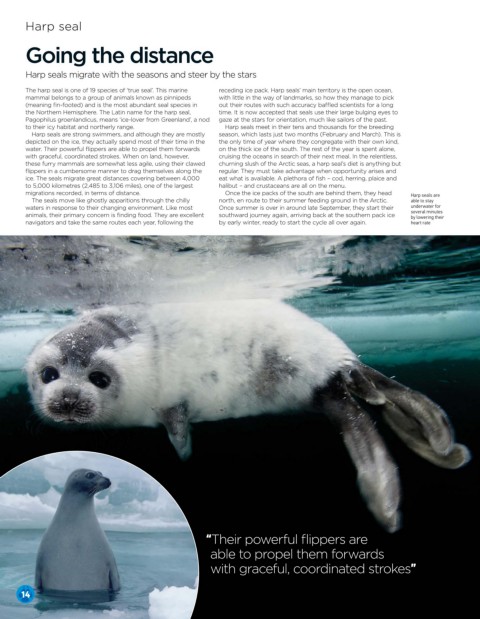
            water. Their powerful flippers are able to propel them forwards   on the thick ice of the south. The rest of the year is spent alone,

            with graceful, coordinated strokes. When on land, however,   cruising the oceans in search of their next meal. In the relentless,
            these furry mammals are somewhat less agile, using their clawed   churning slush of the Arctic seas, a harp seal’s diet is anything but
            flippers in a cumbersome manner to drag themselves along the   regular. They must take advantage when opportunity arises and


            ice. The seals migrate great distances covering between 4,000   eat what is available. A plethora of fish – cod, herring, plaice and
            to 5,000 kilometres (2,485 to 3,106 miles), one of the largest   halibut – and crustaceans are all on the menu.
            migrations recorded, in terms of distance.            Once the ice packs of the south are behind them, they head   Harp seals are
              The seals move like ghostly apparitions through the chilly   north, en route to their summer feeding ground in the Arctic.   able to stay
            waters in response to their changing environment. Like most   Once summer is over in around late September, they start their   underwater for

            animals, their primary concern is finding food. They are excellent   southward journey again, arriving back at the southern pack ice   several minutes
                                                                                                                     by lowering their
            navigators and take the same routes each year, following the   by early winter, ready to start the cycle all over again.  heart rate


                                                             “Their powerful fl ippers are
                                                              able to propel them forwards
                                                                                                               Most of our knowledge of sea
                                                              with graceful, coordinated strokes”
                                                                                                              turtles comes from egg-laying
                                                                                                               females and their hatchlings
           14

