


Page 18 - World of Animals - Issue #28 Magazine
P. 18
Harp seal

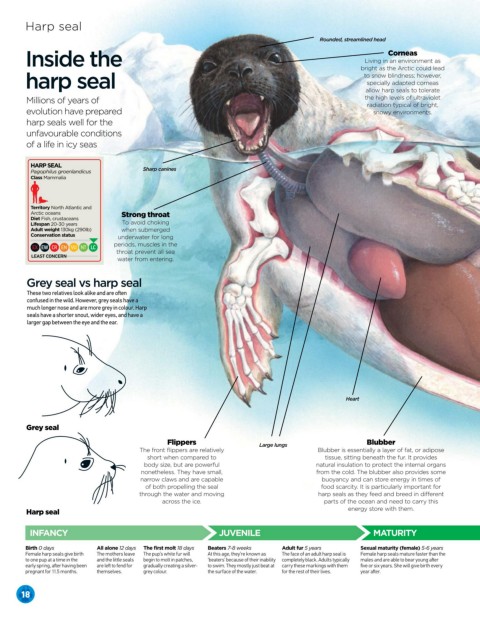
                                                                                            Rounded, streamlined head
            Inside the                                                                                  Living in an environment as
                                                                                                               Corneas

            harp seal                                                                                  bright as the Arctic could lead
                                                                                                        to snow blindness; however,
                                                                                                         specially adapted corneas
                                                                                                         allow harp seals to tolerate
            Millions of years of                                                                        the high levels of ultraviolet
                                                                                                         radiation typical of bright,
            evolution have prepared                                                                        snowy environments.
            harp seals well for the
            unfavourable conditions
            of a life in icy seas


             HARP SEAL
             Pagophilus groenlandicus       Sharp canines
             Class Mammalia


             Territory North Atlantic and
             Arctic oceans            Strong throat
             Diet Fish, crustaceans
             Lifespan 20-30 years     To avoid choking
             Adult weight 130kg (290lb)  when submerged
             Conservation status     underwater for long
                                    periods, muscles in the
                                     throat prevent all sea
              LEAST CONCERN
                                     water from entering.
            Grey seal vs harp seal


            These two relatives look alike and are o en
            confused in the wild. However, grey seals have a
            much longer nose and are more grey in colour. Harp
            seals have a shorter snout, wider eyes, and have a
            larger gap between the eye and the ear.


                                                                                                   Heart


            Grey seal

                                                   Flippers                 Large lungs                  Blubber

                                           The front flippers are relatively                 Blubber is essentially a layer of fat, or adipose
                                             short when compared to                           tissue, sitting beneath the fur. It provides
                                            body size, but are powerful                    natural insulation to protect the internal organs
                                           nonetheless. They have small,                   from the cold. The blubber also provides some
                                           narrow claws and are capable                      buoyancy and can store energy in times of
                                             of both propelling the seal                    food scarcity. It is particularly important for
                                           through the water and moving                     harp seals as they feed and breed in different
                                                 across the ice.                             parts of the ocean and need to carry this
            Harp seal                                                                               energy store with them.

             INFANCY                                             JUVENILE                                  MATURITY

            Birth 0 days       All alone 12 days  The first molt 18 days  Beaters 7-8 weeks  Adult fur 5 years  Sexual maturity (female) 5-6 years

            Female harp seals give birth   The mothers leave   The pup’s white fur will   At this age, they’re known as   The face of an adult harp seal is   Female harp seals mature faster than the
            to one pup at a time in the   and the little seals   begin to molt in patches,   ‘beaters’ because of their inability  completely black. Adults typically   males and are able to bear young a er

            early spring, a er having been   are le  to fend for   gradually creating a silver-  to swim. They mostly just beat at   carry these markings with them   five or six years. She will give birth every


            pregnant for 11.5 months.   themselves.  grey colour.  the surface of the water.  for the rest of their lives.  year a er.
           18

