


Page 12 - World of Animals - Book of Sharks & Ocean Predators
P. 12
Sharks & Ocean Predators
                               WorldMags.net

        Mako shark

        The fastest shark in the sea


        These sharks live out in the open ocean and hold
        two shark speed records. Not only have they been
        clocked at 32 kilometres (20 miles) per hour, but they
        also swim long distances at great speeds. Tagged
        sharks have been known to travel 2,130 kilometres
        (1,320 miles) in just 37 days, averaging almost 60
        kilometres (40 miles) per day.
         Mako sharks can raise the temperature of
        their muscles to get them working faster. They
        also have a high metabolism that keeps them
        moving at all times of the day.

         Feeding on speedy fish like tuna has helped the

        mako develop its super speed. Bony fish make up
        around 90 per cent of a mako shark’s diet and the
        other ten per cent is a variety of foods, from squid
        to dolphins. Mako sharks are apex predators, which
        means they are at the top of their food chain. Without
        the threat from bigger carnivores, these sharks can
        focus all their attention and energy on hunting.
         Deep-water sharks are not usually a threat to
        humans, but the mako has been responsible for
        several attacks. Their speed, aggression and power
        make them one of the deadliest sharks on the planet.


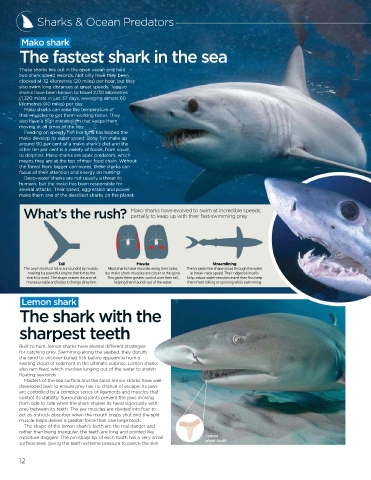
                                               Mako sharks have evolved to swim at incredible speeds,
         What’s the rush? partially to keep up with their fast-swimming prey


                      Tail                       Muscle                     Streamlining
         The asymmetrical tail is surrounded by muscle,   Most sharks have muscles along their sides,   The torpedo-like shape slices through the water
           making it a powerful engine that forces the   but mako shark muscles are closer to the spine.   at break-neck speed. Their ridged skin cells
          shark forward. The shape makes the animal   This gives them greater control over their tail,   help reduce water resistance and their fins keep

          manoeuvrable and helps it change direction.  helping them launch out of the water.  them from rolling or spinning while swimming.
         Lemon shark

        The shark with the


        sharpest teeth


        Built to hunt, lemon sharks have several different strategies
        for catching prey. Swimming along the seabed, they disturb

        the sand to uncover buried fish before appearing from a
        swirling cloud of sediment in the ultimate surprise. Lemon sharks
        also ram feed, which involves lunging out of the water to snatch
        floating sea birds.

         Masters of the sea surface and the sand, lemon sharks have well-
        developed jaws to ensure prey has no chance of escape. Its jaws
        are controlled by a complex series of ligaments and muscles that
        control its stability. Surrounding joints prevent the jaws moving
        from side to side when the shark shakes its head vigorously with
        prey between its teeth. The jaw muscles are divided into four to
        act as a shock absorber when the mouth snaps shut and the split
        muscle helps deliver a greater force than one large block.
         The shape of the lemon shark’s teeth are the real danger and
        rather than being triangular, the teeth are long and pointed like
        miniature daggers. The pin-sharp tip of each tooth has a very small   Lemon
                                                                         shark tooth
        surface area, giving the teeth extreme pressure to pierce the skin.
        12
                                                      WorldMags.net
                                                      WorldMags.net

