


Page 14 - World of Animals - Book of Sharks & Ocean Predators
P. 14
Sharks & Ocean Predators
                               WorldMags.net


         Bull shark

        The deadliest

        shark alive


        With the ability to invade fresh water as well as the
        ocean, bull sharks have evolved to handle environments
        that other sharks cannot. It gets its name from its
        strength, stockiness and ferocious reputation. This
        species has been spotted 4,000 kilometres (2,485
        miles) up the Amazon river, as well as in rivers across
        the globe. Its kidneys have evolved to process both salt
        and fresh water to give it more water to explore.
         It is well documented that bull sharks have eaten
        other members of their own species, along with smaller
        sharks and bony fishes. They swim slowly along the

        seabed, stalking their target before launching toward
        it with its jaws wide open. Its teeth are heavily serrated
        and tear through flesh with ease. The small eyes


        indicate the fish relies more on electro-reception than
        its vision and therefore might be more likely to attack
        an unfamiliar animal. Many attacks on humans have
        been reported, with one expert suffering a bite during
        a television interview.
         Though they aren’t the biggest, these sharks can
        pop up in almost any body of water and attack
        anything that’s swimming. They have a big appetite
        and don’t share the great white’s particular taste when
        it comes to what they eat.

       “  Many attacks on humans have been

        reported, with one expert suffering a
        bite during a television interview”


        Megalodon myth


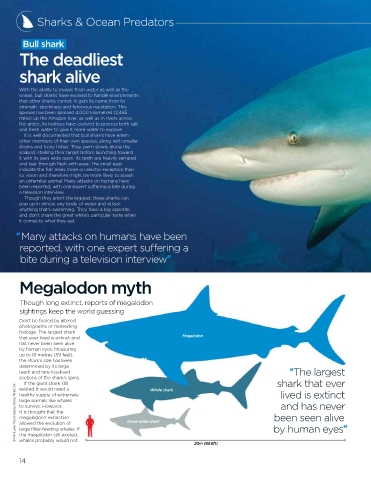
        Though long extinct, reports of megalodon
        sightings keep the world guessing
        Don’t be fooled by altered
        photographs or misleading
        footage. The largest shark
                                                                 Megalodon
        that ever lived is extinct and
        has never been seen alive
        by human eyes. Measuring
        up to 18 metres (59 feet),
        the shark’s size has been
        determined by its large
        teeth and rare fossilised                                                                      “The largest
        sections of the shark’s spine.
         If the giant shark still                     Whale shark                                 shark that ever
      © Frank Lane Picture Agency; Alamy; Thinkstock  large animals like whales   Great white shark  been seen alive
        existed it would need a
                                                                                                    lived is extinct
        healthy supply of extremely
                                                                                                    and has never
        to survive. However,
        It is thought that the
        megalodon’s extinction
        allowed the evolution of
        large filter-feeding whales. If

        the megalodon still existed,
        whales probably would not.
                                                                     20m (65.6ft)                by human eyes”
        14
                                                      WorldMags.net
                                                      WorldMags.net

