


Page 45 - Complete Cat Care: How To Keep Your Cat Healthy and Happy
P. 45
their moisture from food, cats will
        not drink as often as they eat, but
        they may drink more if fed solely
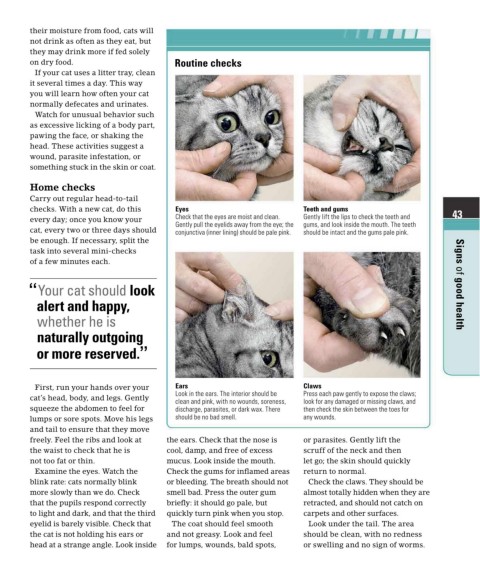
        on dry food.                     Routine checks
         If your cat uses a litter tray, clean
        it several times a day. This way
        you will learn how often your cat
        normally defecates and urinates.
         Watch for unusual behavior such
        as excessive licking of a body part,
        pawing the face, or shaking the
        head. These activities suggest a
        wound, parasite infestation, or
        something stuck in the skin or coat.

        Home checks
        Carry out regular head-to-tail
        checks. With a new cat, do this   Eyes                         Teeth and gums                    43
        every day; once you know your    Check that the eyes are moist and clean.   Gently lift the lips to check the teeth and
                                                                       gums, and look inside the mouth. The teeth
                                         Gently pull the eyelids away from the eye; the
        cat, every two or three days should   conjunctiva (inner lining) should be pale pink.  should be intact and the gums pale pink.
        be enough. If necessary, split the
        task into several mini-checks
        of a few minutes each.

       “Your cat should look                                                                              Signs of good health

         alert and happy,
         whether he is
         naturally outgoing
         or more reserved.”


         First, run your hands over your   Ears                        Claws
        cat’s head, body, and legs. Gently   Look in the ears. The interior should be    Press each paw gently to expose the claws;
                                                                       look for any damaged or missing claws, and
                                         clean and pink, with no wounds, soreness,
        squeeze the abdomen to feel for   discharge, parasites, or dark wax. There   then check the skin between the toes for
        lumps or sore spots. Move his legs   should be no bad smell.   any wounds.
        and tail to ensure that they move
        freely. Feel the ribs and look at    the ears. Check that the nose is   or parasites. Gently lift the
        the waist to check that he is    cool, damp, and free of excess   scruff of the neck and then
        not too fat or thin.           mucus. Look inside the mouth.   let go; the skin should quickly
         Examine the eyes. Watch the   Check the gums for inflamed areas   return to normal.
        blink rate: cats normally blink   or bleeding. The breath should not   Check the claws. They should be
        more slowly than we do. Check    smell bad. Press the outer gum   almost totally hidden when they are
        that the pupils respond correctly    briefly: it should go pale, but   retracted, and should not catch on
        to light and dark, and that the third   quickly turn pink when you stop.  carpets and other surfaces.
        eyelid is barely visible. Check that   The coat should feel smooth    Look under the tail. The area
        the cat is not holding his ears or   and not greasy. Look and feel    should be clean, with no redness
        head at a strange angle. Look inside   for lumps, wounds, bald spots,    or swelling and no sign of worms.


   US_042-043_signs_of_good_health.indd   43                                                         24/10/2013   14:56

