


Page 87 - Complete Cat Care: How To Keep Your Cat Healthy and Happy
P. 87
85


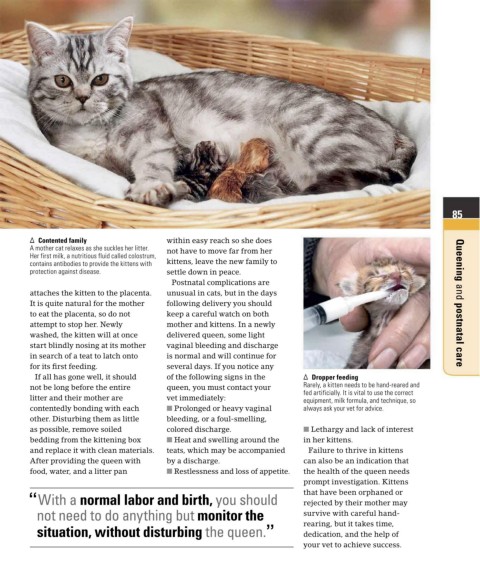
        △  Contented family            within easy reach so she does
        A mother cat relaxes as she suckles her litter.   not have to move far from her
        Her first milk, a nutritious fluid called colostrum,
        contains antibodies to provide the kittens with   kittens, leave the new family to
        protection against disease.    settle down in peace.
                                        Postnatal complications are
        attaches the kitten to the placenta.   unusual in cats, but in the days
        It is quite natural for the mother    following delivery you should                               Queening and postnatal care
        to eat the placenta, so do not   keep a careful watch on both
        attempt to stop her. Newly     mother and kittens. In a newly
        washed, the kitten will at once    delivered queen, some light
        start blindly nosing at its mother    vaginal bleeding and discharge
        in search of a teat to latch onto    is normal and will continue for
        for its first feeding.         several days. If you notice any
         If all has gone well, it should    of the following signs in the    △  Dropper feeding
        not be long before the entire    queen, you must contact your    Rarely, a kitten needs to be hand-reared and
        litter and their mother are    vet immediately:                fed artificially. It is vital to use the correct
                                                                       equipment, milk formula, and technique, so
        contentedly bonding with each   ■ Prolonged or heavy vaginal   always ask your vet for advice.
        other. Disturbing them as little    bleeding, or a foul-smelling,
        as possible, remove soiled     colored discharge.              ■ Lethargy and lack of interest
        bedding from the kittening box    ■ Heat and swelling around the   in her kittens.
        and replace it with clean materials.   teats, which may be accompanied   Failure to thrive in kittens
        After providing the queen with   by a discharge.               can also be an indication that
        food, water, and a litter pan    ■ Restlessness and loss of appetite.  the health of the queen needs
                                                                       prompt investigation. Kittens
       “With a normal labor and birth, you should                      that have been orphaned or
                                                                       rejected by their mother may
         not need to do anything but monitor the                       survive with careful hand-
         situation, without disturbing the queen.”                     rearing, but it takes time,
                                                                       dedication, and the help of
                                                                       your vet to achieve success.


   US_084_085_Queening_Postnatal.indd   85                                                           24/10/2013   15:03

