


Page 14 - (DK) Home Doctor: Providing practical advice on home treatments
P. 14
12   COMMON CONDITIONS


         GENERAL SYMPTOMS


         Fever


              In a fever, your body temperature is raised persistently above the
                                                                            WARNING
              normal level of 98.6°F (37°C). A fever is one way in which the body
              responds to infection, so it is likely to result from a viral illness  Get medical help immediately if:
              such as the flu, or a throat, chest, or bladder infection. It can also  ● Temperature is over 103°F (39.4°C)
                                                                     ● You have a headache, sensitivity
              be due to other diseases, heatstroke, sunburn, or reactions to
                                                                     to light, stiff neck, and/or a rash
              drugs. At first you feel warm; if your temperature continues to  ● You are drowsy or confused
              rise, you feel chilled and may shiver, then as it drops you feel hot  ● You have difficulty breathing
              and flushed. You may become dehydrated if a fever persists.


              See your doctor first
                                                                    DRUG REMEDIES
              Arrange to see your doctor promptly if you
              feel weak and very ill, and/or if you have a  Analgesics such as acetaminophen (see p.177)
              specific symptom with a fever, such as an     and ibuprofen (see p.185) will reduce fever and help
              earache, a rash, or a cough with phlegm.      to relieve headache and muscle aches. Start taking
                                                            an analgesic as soon as you begin to feel feverish.

         What you can do yourself
                                                                PRACTICAL TECHNIQUE
              Use the following measures in conjunction with
              any treatment from your doctor.
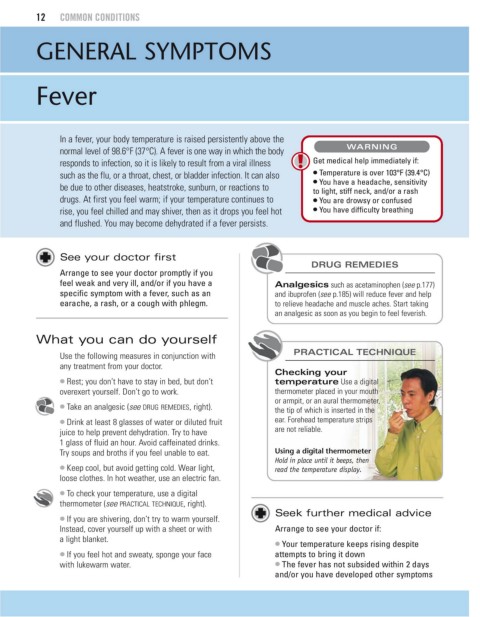
                                                            Checking your
              ● Rest; you don’t have to stay in bed, but don’t  temperature Use a digital
              overexert yourself. Don’t go to work.         thermometer placed in your mouth
                                                            or armpit, or an aural thermometer,
              ● Take an analgesic (see DRUG REMEDIES, right).
                                                            the tip of which is inserted in the
              ● Drink at least 8 glasses of water or diluted fruit  ear. Forehead temperature strips
              juice to help prevent dehydration. Try to have   are not reliable.
              1 glass of fluid an hour. Avoid caffeinated drinks.
              Try soups and broths if you feel unable to eat.  Using a digital thermometer
                                                            Hold in place until it beeps, then
              ● Keep cool, but avoid getting cold. Wear light,  read the temperature display.
              loose clothes. In hot weather, use an electric fan.
              ● To check your temperature, use a digital
              thermometer (see PRACTICAL TECHNIQUE, right).
                                                            Seek further medical advice
              ● If you are shivering, don’t try to warm yourself.
              Instead, cover yourself up with a sheet or with   Arrange to see your doctor if:
              a light blanket.
                                                            ● Your temperature keeps rising despite
              ● If you feel hot and sweaty, sponge your face  attempts to bring it down
              with lukewarm water.                          ● The fever has not subsided within 2 days
                                                            and/or you have developed other symptoms

