


Page 19 - (DK) Home Doctor: Providing practical advice on home treatments
P. 19
COMMON CONDITIONS: GENERAL SYMPTOMS   17

         Difficulty sleeping


              Many people have difficulty sleeping, either because they find it hard to get to sleep at night or because they
              wake early and cannot get back to sleep. Adults need 7–8 hours of sleep, on average, but people need less
              as they get older, and elderly people may need as little as 5–6 hours. An occasional sleepless night won’t do
              you any harm, although you may feel tired the next day. More persistent sleep disturbances are often due to
              stress, anxiety, or depression and may leave you continually tired, irritable, and unable to concentrate. Physical
              symptoms such as pain, breathing problems, and hot flashes, and some medicines, can also disturb sleep.
              See also Stress, pp.20–21; Feeling depressed, pp.22–23.


              See your doctor first
                                                                     PRACTICAL TIPS
              Make an appointment to see your doctor if:
              ● You feel depressed                          Managing sleeplessness Try these
                                                            tips, and keep using them until they begin to work.
              ● Physical symptoms are preventing sleep
                                                            ● Stop working at least an hour before bedtime and
                                                            read a book or listen to relaxing music. Keep your
                                                            bedroom quiet, dark, and not too hot or cold.
         What you can do yourself                           ● If you can’t fall asleep within 30 minutes, get up,
                                                            go into another room, and read. Don’t watch TV.
              There are several things you can try to make
                                                            ● If your head is buzzing with tasks for the next day,
              it easier to get a good night’s sleep.
                                                            keep a notepad by your bed and jot them down.
              ● Go to bed and get up at the same times each day.
              Even if you are tired, don’t take naps during the day.
              ● Don’t eat a heavy or rich meal less than 3 hours
                                                                  NATURAL REMEDIES
              before you go to bed. Avoid coffee, tea, cola,
              alcohol, and smoking. If you are hungry, eat a  Herbal sleeping remedies (see p.184)
              cookie or a banana. Drink a glass of warm milk  Tinctures or pills containing valerian, passionflower,
              half an hour before bedtime.                  or chamomile may help promote restful sleep.
              ● Use practical measures to help you get over  Lavender oil (see p.185) is a
              your sleep difficulties (see PRACTICAL TIPS, right).  traditional sleep remedy. Try inhaling it, or
                                                            adding it to a warm bath before bedtime.
              ● Try an herbal remedy that promotes sleep
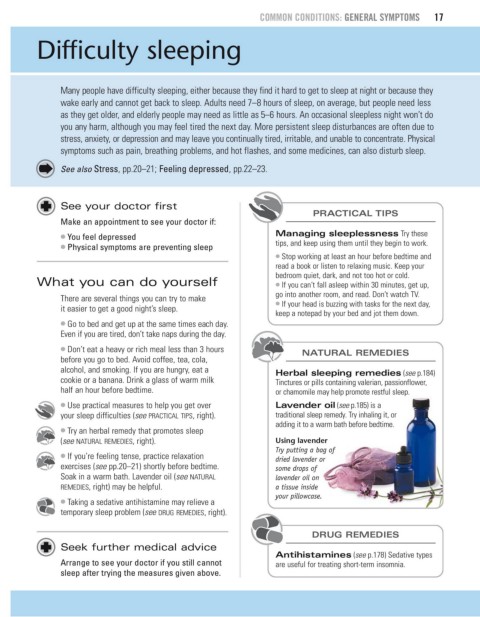
              (see NATURAL REMEDIES, right).                Using lavender
                                                            Try putting a bag of
              ● If you’re feeling tense, practice relaxation
                                                            dried lavender or
              exercises (see pp.20–21) shortly before bedtime.  some drops of
              Soak in a warm bath. Lavender oil (see NATURAL  lavender oil on
              REMEDIES, right) may be helpful.              a tissue inside
                                                            your pillowcase.
              ● Taking a sedative antihistamine may relieve a
              temporary sleep problem (see DRUG REMEDIES, right).

                                                                    DRUG REMEDIES
              Seek further medical advice
                                                            Antihistamines (see p.178) Sedative types
              Arrange to see your doctor if you still cannot  are useful for treating short-term insomnia.
              sleep after trying the measures given above.

