


Page 25 - (DK) Home Doctor: Providing practical advice on home treatments
P. 25
COMMON CONDITIONS: GENERAL SYMPTOMS   23


         What you can do yourself continued…
                                                                     PRACTICAL TIPS
              ● Try to eat regularly, even though you may not
              feel like it. Choose foods that you enjoy, but make  Coping with SAD Symptoms of seasonal
              sure you include plenty of vegetables, fruit, bread,  affective disorder usually develop as the days get
              pasta, rice, and potatoes. Have small portions if  shorter in the fall. You may feel sad, low, and tired,
              you don’t feel like eating large meals.       want to sleep more than you normally do, and have
                                                            cravings for starchy or sugary foods. Increased
              ● Exercise helps you relax, improves sleep, and
                                                            exposure to natural light is thought to help SAD
              may reduce depression by releasing chemicals in  sufferers, so try the following tips.
              the brain that improve mood. Just going for a walk
                                                            ● Try to get outdoors as much as possible on winter
              or doing some gardening is beneficial. Everybody
              should be capable of getting some exercise, but   days. Even on dull, cloudy days you will benefit from
                                                            exposure to natural light.
              if you have a medical condition (such as arthritis
                                                            ● Arrange work and home conditions so that you are
              or a heart problem), check with your doctor first.
                                                            exposed to as much natural light as possible. Work
              ● Try the natural remedy St. John’s wort to relieve  by a window if you can. Trim back trees and bushes
              low moods (see NATURAL REMEDIES, left).       around your home to let in light.
                                                            ● If possible, treat yourself to a short winter break
              ● Include foods such as oily fish and olive oil in  in a sunny area of the country.
              your diet to boost your levels of essential fatty  ● Some people find light therapy helpful. This is
              acids, or EFAs (see NATURAL REMEDIES, left). These  usually given using a special light box that emits
              substances may help combat depression.        a very bright light. Other devices simulate a natural
                                                            dawn in the morning. Light boxes are usually
              ● Cut down or stop drinking alcohol. Although
                                                            expensive, so discuss what might be of value
              it may appear to offer a “quick fix,” alcohol can  with your doctor before you invest in equipment.
              contribute to depression and also affects your
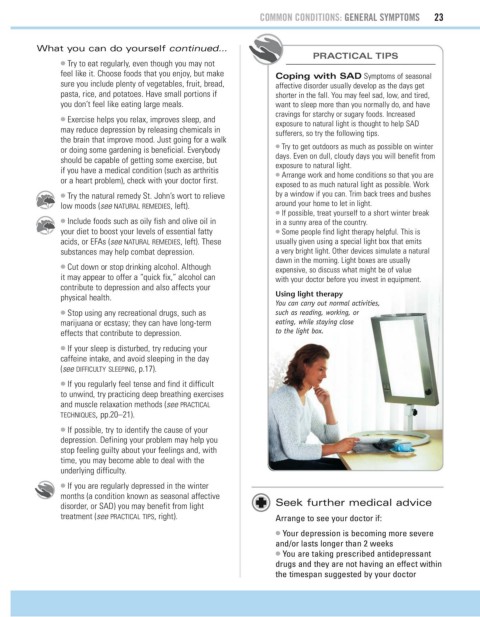
                                                            Using light therapy
              physical health.
                                                            You can carry out normal activities,
              ● Stop using any recreational drugs, such as  such as reading, working, or
              marijuana or ecstasy; they can have long-term  eating, while staying close
              effects that contribute to depression.        to the light box.
              ● If your sleep is disturbed, try reducing your
              caffeine intake, and avoid sleeping in the day
              (see DIFFICULTY SLEEPING, p.17).
              ● If you regularly feel tense and find it difficult
              to unwind, try practicing deep breathing exercises
              and muscle relaxation methods (see PRACTICAL
              TECHNIQUES, pp.20–21).
              ● If possible, try to identify the cause of your
              depression. Defining your problem may help you
              stop feeling guilty about your feelings and, with
              time, you may become able to deal with the
              underlying difficulty.
              ● If you are regularly depressed in the winter
              months (a condition known as seasonal affective
              disorder, or SAD) you may benefit from light  Seek further medical advice
              treatment (see PRACTICAL TIPS, right).        Arrange to see your doctor if:

                                                            ● Your depression is becoming more severe
                                                            and/or lasts longer than 2 weeks
                                                            ● You are taking prescribed antidepressant
                                                            drugs and they are not having an effect within
                                                            the timespan suggested by your doctor

