


Page 35 - (DK) Home Doctor: Providing practical advice on home treatments
P. 35
COMMON CONDITIONS: INFECTIOUS DISEASES  33

         Shingles


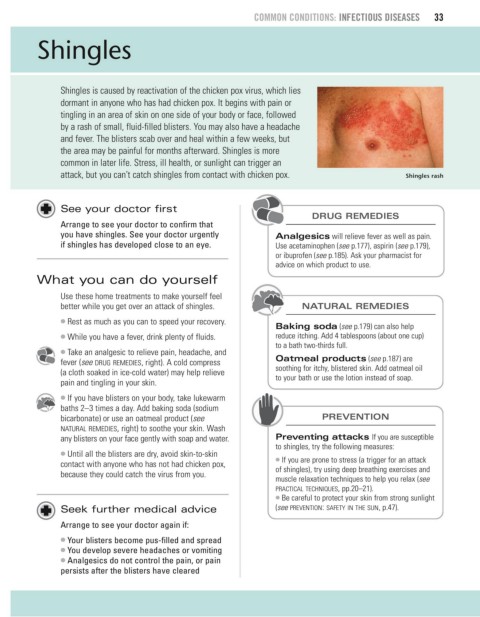
              Shingles is caused by reactivation of the chicken pox virus, which lies
              dormant in anyone who has had chicken pox. It begins with pain or
              tingling in an area of skin on one side of your body or face, followed
              by a rash of small, fluid-filled blisters. You may also have a headache
              and fever. The blisters scab over and heal within a few weeks, but
              the area may be painful for months afterward. Shingles is more
              common in later life. Stress, ill health, or sunlight can trigger an
              attack, but you can’t catch shingles from contact with chicken pox.        Shingles rash


              See your doctor first
                                                                    DRUG REMEDIES
              Arrange to see your doctor to confirm that
              you have shingles. See your doctor urgently   Analgesics will relieve fever as well as pain.
              if shingles has developed close to an eye.    Use acetaminophen (see p.177), aspirin (see p.179),
                                                            or ibuprofen (see p.185). Ask your pharmacist for
                                                            advice on which product to use.
         What you can do yourself

              Use these home treatments to make yourself feel
              better while you get over an attack of shingles.    NATURAL REMEDIES
              ● Rest as much as you can to speed your recovery.
                                                            Baking soda (see p.179) can also help
              ● While you have a fever, drink plenty of fluids.  reduce itching. Add 4 tablespoons (about one cup)
                                                            to a bath two-thirds full.
              ● Take an analgesic to relieve pain, headache, and
                                                            Oatmeal products (see p.187) are
              fever (see DRUG REMEDIES, right). A cold compress
                                                            soothing for itchy, blistered skin. Add oatmeal oil
              (a cloth soaked in ice-cold water) may help relieve
                                                            to your bath or use the lotion instead of soap.
              pain and tingling in your skin.
              ● If you have blisters on your body, take lukewarm
              baths 2–3 times a day. Add baking soda (sodium
              bicarbonate) or use an oatmeal product (see              PREVENTION
              NATURAL REMEDIES, right) to soothe your skin. Wash
              any blisters on your face gently with soap and water.  Preventing attacks If you are susceptible
                                                            to shingles, try the following measures:
              ● Until all the blisters are dry, avoid skin-to-skin
                                                            ● If you are prone to stress (a trigger for an attack
              contact with anyone who has not had chicken pox,
                                                            of shingles), try using deep breathing exercises and
              because they could catch the virus from you.
                                                            muscle relaxation techniques to help you relax (see
                                                            PRACTICAL TECHNIQUES, pp.20–21).
                                                            ● Be careful to protect your skin from strong sunlight
              Seek further medical advice                   (see PREVENTION: SAFETY IN THE SUN, p.47).
              Arrange to see your doctor again if:
              ● Your blisters become pus-filled and spread
              ● You develop severe headaches or vomiting
              ● Analgesics do not control the pain, or pain
              persists after the blisters have cleared

