


Page 36 - (DK) Home Doctor: Providing practical advice on home treatments
P. 36
34   COMMON CONDITIONS


         SKIN, HAIR, AND NAIL PROBLEMS


         Impetigo


              Impetigo is a common skin infection that mainly affects children. It can
              appear anywhere on the body but most often develops on the face,
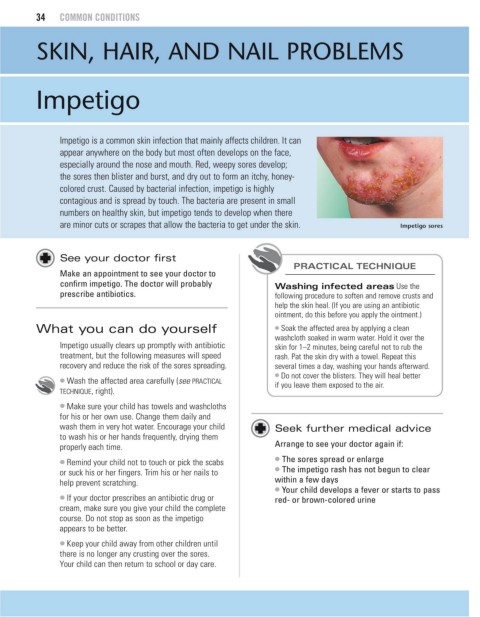
              especially around the nose and mouth. Red, weepy sores develop;
              the sores then blister and burst, and dry out to form an itchy, honey-
              colored crust. Caused by bacterial infection, impetigo is highly
              contagious and is spread by touch. The bacteria are present in small
              numbers on healthy skin, but impetigo tends to develop when there
              are minor cuts or scrapes that allow the bacteria to get under the skin.   Impetigo sores


              See your doctor first
                                                                PRACTICAL TECHNIQUE
              Make an appointment to see your doctor to
              confirm impetigo. The doctor will probably    Washing infected areas Use the
              prescribe antibiotics.                        following procedure to soften and remove crusts and
                                                            help the skin heal. (If you are using an antibiotic
                                                            ointment, do this before you apply the ointment.)
         What you can do yourself                           ● Soak the affected area by applying a clean
                                                            washcloth soaked in warm water. Hold it over the
              Impetigo usually clears up promptly with antibiotic  skin for 1–2 minutes, being careful not to rub the
              treatment, but the following measures will speed  rash. Pat the skin dry with a towel. Repeat this
              recovery and reduce the risk of the sores spreading.  several times a day, washing your hands afterward.
                                                            ● Do not cover the blisters. They will heal better
              ● Wash the affected area carefully (see PRACTICAL
                                                            if you leave them exposed to the air.
              TECHNIQUE, right).
              ● Make sure your child has towels and washcloths
              for his or her own use. Change them daily and
              wash them in very hot water. Encourage your child  Seek further medical advice
              to wash his or her hands frequently, drying them
              properly each time.                           Arrange to see your doctor again if:
                                                            ● The sores spread or enlarge
              ● Remind your child not to touch or pick the scabs
                                                            ● The impetigo rash has not begun to clear
              or suck his or her fingers. Trim his or her nails to
                                                            within a few days
              help prevent scratching.
                                                            ● Your child develops a fever or starts to pass
              ● If your doctor prescribes an antibiotic drug or  red- or brown-colored urine
              cream, make sure you give your child the complete
              course. Do not stop as soon as the impetigo
              appears to be better.
              ● Keep your child away from other children until
              there is no longer any crusting over the sores.
              Your child can then return to school or day care.

