


Page 40 - (DK) Home Doctor: Providing practical advice on home treatments
P. 40
38   COMMON CONDITIONS: SKIN, HAIR, AND NAIL PROBLEMS

         Eczema


              Eczema causes patches of dry, intensely itchy skin, which usually
              appear on the face, hands, wrists, and scalp, and in the creases
              of the knees and elbows. Repeated scratching may leave the skin
              cracked and open to infection. Eczema is often linked to allergies
              and asthma. It usually develops in infancy and disappears by
              the early teenage years, but adults may have relapses triggered
              by factors such as stress, dust mites, and some foods.

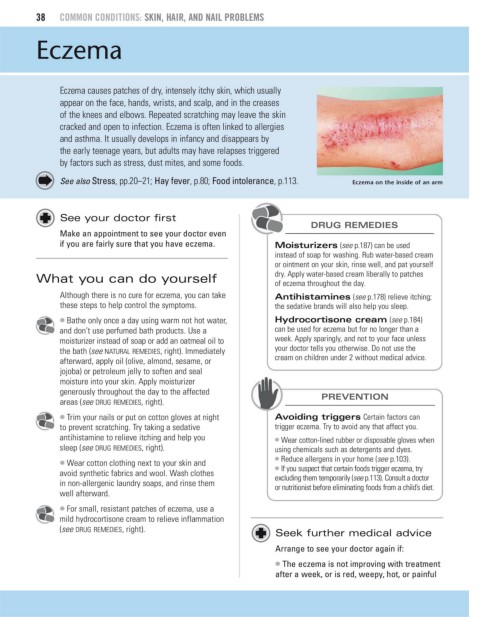
              See also Stress, pp.20–21; Hay fever, p.80; Food intolerance, p.113.  Eczema on the inside of an arm


              See your doctor first
                                                                    DRUG REMEDIES
              Make an appointment to see your doctor even
              if you are fairly sure that you have eczema.  Moisturizers (see p.187) can be used
                                                            instead of soap for washing. Rub water-based cream
                                                            or ointment on your skin, rinse well, and pat yourself
                                                            dry. Apply water-based cream liberally to patches
         What you can do yourself
                                                            of eczema throughout the day.
              Although there is no cure for eczema, you can take  Antihistamines (see p.178) relieve itching;
              these steps to help control the symptoms.     the sedative brands will also help you sleep.
              ● Bathe only once a day using warm not hot water,  Hydrocortisone cream (see p.184)
              and don’t use perfumed bath products. Use a   can be used for eczema but for no longer than a
              moisturizer instead of soap or add an oatmeal oil to  week. Apply sparingly, and not to your face unless
              the bath (see NATURAL REMEDIES, right). Immediately  your doctor tells you otherwise. Do not use the
              afterward, apply oil (olive, almond, sesame, or  cream on children under 2 without medical advice.
              jojoba) or petroleum jelly to soften and seal
              moisture into your skin. Apply moisturizer
              generously throughout the day to the affected
              areas (see DRUG REMEDIES, right).                       PREVENTION
              ● Trim your nails or put on cotton gloves at night  Avoiding triggers Certain factors can
              to prevent scratching. Try taking a sedative  trigger eczema. Try to avoid any that affect you.
              antihistamine to relieve itching and help you  ● Wear cotton-lined rubber or disposable gloves when
              sleep (see DRUG REMEDIES, right).             using chemicals such as detergents and dyes.
                                                            ● Reduce allergens in your home (see p.103).
              ● Wear cotton clothing next to your skin and
                                                            ● If you suspect that certain foods trigger eczema, try
              avoid synthetic fabrics and wool. Wash clothes   excluding them temporarily (see p.113). Consult a doctor
              in non-allergenic laundry soaps, and rinse them  or nutritionist before eliminating foods from a child’s diet.
              well afterward.
              ● For small, resistant patches of eczema, use a
              mild hydrocortisone cream to relieve inflammation
              (see DRUG REMEDIES, right).
                                                            Seek further medical advice
                                                            Arrange to see your doctor again if:
                                                            ● The eczema is not improving with treatment
                                                            after a week, or is red, weepy, hot, or painful

