


Page 97 - (DK) Home Doctor: Providing practical advice on home treatments
P. 97
COMMON CONDITIONS: HEAD, BACK, AND LIMB PROBLEMS  95

         Varicose veins


              Varicose veins are bluish, distorted veins that bulge beneath the skin,
              usually on the inside leg, at the back of the calf, or at the ankle. An
              affected leg may feel heavy, your ankle may swell, and the skin over
              the veins may be dry and itchy. The problem is more common in
              women and often runs in families. Pregnancy, constipation, being
              overweight, or having to stand for long periods increases the risk.
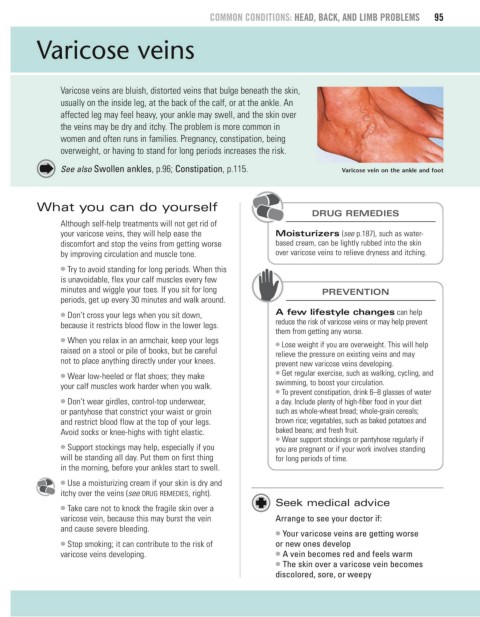
              See also Swollen ankles, p.96; Constipation, p.115.          Varicose vein on the ankle and foot


         What you can do yourself
                                                                    DRUG REMEDIES
              Although self-help treatments will not get rid of
              your varicose veins, they will help ease the  Moisturizers (see p.187), such as water-
              discomfort and stop the veins from getting worse  based cream, can be lightly rubbed into the skin
              by improving circulation and muscle tone.     over varicose veins to relieve dryness and itching.
              ● Try to avoid standing for long periods. When this
              is unavoidable, flex your calf muscles every few
              minutes and wiggle your toes. If you sit for long        PREVENTION
              periods, get up every 30 minutes and walk around.
              ● Don’t cross your legs when you sit down,    A few lifestyle changes can help
                                                            reduce the risk of varicose veins or may help prevent
              because it restricts blood flow in the lower legs.
                                                            them from getting any worse.
              ● When you relax in an armchair, keep your legs
                                                            ● Lose weight if you are overweight. This will help
              raised on a stool or pile of books, but be careful  relieve the pressure on existing veins and may
              not to place anything directly under your knees.  prevent new varicose veins developing.
              ● Wear low-heeled or flat shoes; they make    ● Get regular exercise, such as walking, cycling, and
              your calf muscles work harder when you walk.   swimming, to boost your circulation.
                                                            ● To prevent constipation, drink 6–8 glasses of water
              ● Don’t wear girdles, control-top underwear,   a day. Include plenty of high-fiber food in your diet
              or pantyhose that constrict your waist or groin   such as whole-wheat bread; whole-grain cereals;
              and restrict blood flow at the top of your legs.  brown rice; vegetables, such as baked potatoes and
              Avoid socks or knee-highs with tight elastic.  baked beans; and fresh fruit.
                                                            ● Wear support stockings or pantyhose regularly if
              ● Support stockings may help, especially if you  you are pregnant or if your work involves standing
              will be standing all day. Put them on first thing   for long periods of time.
              in the morning, before your ankles start to swell.
              ● Use a moisturizing cream if your skin is dry and
              itchy over the veins (see DRUG REMEDIES, right).
                                                            Seek medical advice
              ● Take care not to knock the fragile skin over a
              varicose vein, because this may burst the vein   Arrange to see your doctor if:
              and cause severe bleeding.
                                                            ● Your varicose veins are getting worse
              ● Stop smoking; it can contribute to the risk of  or new ones develop
              varicose veins developing.                    ● A vein becomes red and feels warm
                                                            ● The skin over a varicose vein becomes
                                                            discolored, sore, or weepy

