


Page 26 - (DK Eyewitness) Top 10 Travel Guide - Brussels Bruges Ghent & Antwerp
P. 26
24 INTRODUCING BRUSSELS
Belgian Comic Strip Art
Belgian comic strip art is as much a part of Belgian culture where he expressed a strong
as chocolates and beer. The seeds of this great passion were sense of justice in such stories
sown when the US comic strip Little Nemo was published as King Ottakar’s
Sceptre, where
in French in 1908 to huge popular acclaim in Belgium. The a fascist army
country’s reputation for producing some of the best comic attempts to seize
strip art in Europe was established after World War II. Before control of a
the war, Europe was awash with American comics, but the central European
Nazis called a halt to the supply. Local artists took over, state. Hergé took
and found that there was a large audience who preferred great care in Spirou cover
researching his
homegrown comic heroes. This explosion in comic strip art stories; for Le Lotus
was led by perhaps the most famous Belgian creation ever, Bleu in 1934, which was set in
Tintin, who, with his dog Snowy, is as recognizable across China, he wrote: “I started…
Europe as Mickey Mouse. showing a real interest in
the people and countries
I was sending Tintin off to,
Le petit Vingtième. Eager to concerned by a sense of
invent an original comic strip, honesty to my readers.”
Hergé came up with the
character of Tintin the reporter, Post-War Boom
who first appear ed in the story
Tintin au Pays des Soviets on 10 Belgium’s oldest comic strip
January 1929. Over the next journal Spirou was launched
10 years, the character deve- in April 1938 and, alongside
loped and grew in popularity. the weekly Journal de Tintin
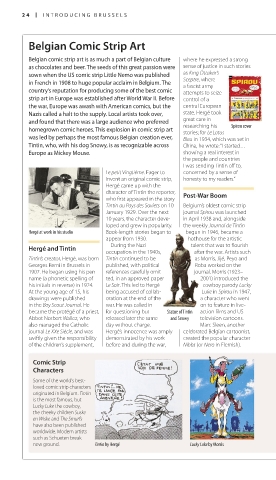
Hergé at work in his studio Book-length stories began to begun in 1946, became a
appear from 1930. hothouse for the artistic
During the Nazi talent that was to flourish
Hergé and Tintin
occupation in the 1940s, after the war. Artists such
Tintin’s creator, Hergé, was born Tintin continued to be as Morris, Jijé, Peyo and
Georges Remi in Brussels in published, with political Roba worked on the
1907. He began using his pen references carefully omit- journal. Morris (1923–
name (a pho netic spelling of ted, in an approved paper 2001) introduced the
his initials in reverse) in 1924. Le Soir. This led to Hergé cow boy parody Lucky
At the young age of 15, his being accused of collab- Luke in Spirou in 1947,
drawings were published oration at the end of the a character who went
in the Boy Scout Journal. He war. He was called in on to feature in live-
became the pro tégé of a priest, for questioning but Statue of Tintin action films and US
Abbot Norbert Wallez, who released later the same and Snowy television cartoons.
also managed the Catholic day without charge. Marc Sleen, another
journal Le XXe Siècle, and was Hergé’s innocence was amply celebrated Belgian cartoonist,
swiftly given the responsibility demonstrated by his work created the popular character
of the children’s supplement, before and during the war, Nibbs (or Nero in Flemish).
Comic Strip
Characters
Some of the world’s best-
loved comic strip characters
originated in Belgium. Tintin
is the most famous, but
Lucky Luke the cowboy,
the cheeky children Suske
en Wiske and The Smurfs
have also been published
worldwide. Modern artists
such as Schueten break
new ground. Tintin by Hergé Lucky Luke by Morris
024-025_EW_Brussels.indd 24 10/01/17 10:54 am

