


Page 88 - (DK Eyewitness) Travel Guide - London
P. 88
86 L ONDON AREA B Y AREA
p Tate Britain
Tate Britain displays the world’s largest collection of
British art from the 16th to the 21st centuries. In the
Clore Galleries are works from the magnificent Turner
Bequest, left to the nation by the great landscape artist Main
J M W Turner in 1851. The Clore Galleries have their own floor
entrance, giving direct access to the Turner Collection
and allowing a full appreciation of Sir James Stirling’s
Post-Modernist design for the building. The Tate
often loans out or removes works for
restoration, so the exhibits described
here may not always be on display.
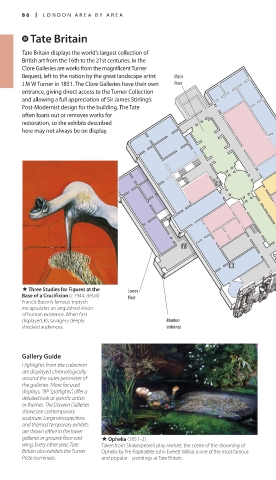
. Three Studies for Figures at the Lower
Base of a Crucifixion (c.1944, detail) floor
Francis Bacon’s famous triptych
encapsulates an anguished vision
of human existence. When first
displayed, its savagery deeply Manton
shocked audiences. entrance
Gallery Guide
Highlights from the collection
are displayed chronologically
around the outer perimeter of
the galleries. More focused
displays, “BP Spotlights”, offer a
detailed look at specific artists
or themes. The Duveen Galleries
show case contemporary
sculpture. Large retrospectives
and themed temporary exhibits
are shown either in the lower
galleries or ground-floor east . Ophelia (1851–2)
wing. Every other year, Tate Taken from Shakespeare’s play Hamlet, the scene of the drowning of
Britain also exhibits the Turner Ophelia by Pre-Raphaelite John Everett Millais is one of the most famous –
Prize nominees. and popular – paintings at Tate Britain.
086-087_EW_London.indd 86 21/03/17 2:20 pm

