


Page 26 - World of Animals - Issue #33
P. 26
Otters of the world
Protecting otters
Anna Guthrie is the Media and PR
manager for the Wildlife Trusts UK
What threats are otters facing in
the UK?
Hunted by hounds, made homeless
by the destruction of wetlands and poisoned
by pesticides, this once widespread secretive
mammal was pushed to the very edge of
extinction. By the 1970s and 1980s, the otter had
almost disappeared from rivers and waterways
in England except for a few areas in the south-
west and the borders. They survived in Wales
and Scotland and Northern Ireland, but in much
smaller numbers. The recovery of the otter is a
real good news story but it is important not to be
complacent. They remain at risk from busy roads,
illegal crayfish traps and persecution.
How important are otters to ecological systems?
An iconic species, the otter symbolises the
health of our rivers and wetland habitats and
is one of the best indicators of a healthy river
ecosystem. It is a story of natural recovery in
response to conservation efforts and a credit to the
Environment Agency and the many organisations,
such as The Wildlife Trusts and angling
organisations, which have worked hard to restore
river and wetland habitats to benefit a whole range
of wetland species such brown trout and water
vole, as well as the otter.
What sort of projects are The Wildlife Trusts
involved in to help otters? How can World of
Animals readers get involved?
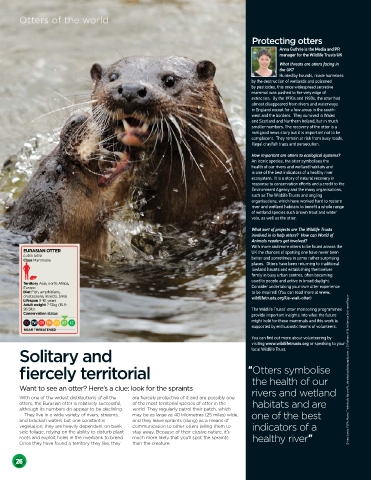
With more and more otters to be found across the
EURASIAN OTTER UK the chances of spotting one have never been
Lutra lutra
Class Mammalia better and sometimes in some rather surprising
places. Otters have been returning to traditional
lowland haunts and establishing themselves
firmly in busy urban centres, oen becoming
used to people and active in broad daylight.
Territory Asia, north Africa,
Europe Consider undertaking your own otter experience
Diet Fish, amphibians, to be inspired! (You can read more at www.
crustaceans, insects, birds wildlifetrusts.org/lie-wait-otter)
Lifespan 9-10 years
Adult weight 7-12kg (15.5-
26.5lb) The Wildlife Trusts’ otter monitoring programmes
Conservation status provide important insights into what the future
might hold for these mammals and this work is
supported by enthusiastic teams of volunteers.
NEAR THREATENED
You can find out more about volunteering by
visiting www.wildlifetrusts.org or speaking to your
Solitary and local Wildlife Trust.
fiercely territorial “Otters symbolise © Amy Lewis; FLPA; Alamy; Thinkstock; Nature PL; christaylorphotography.com; U.S. Fish and Wildlife Service Southeast Region
the health of our
Want to see an otter? Here’s a clue: look for the spraints rivers and wetland
With one of the widest distributions of all the are fiercely protective of it and are possibly one
otters, the Eurasian otter is relatively successful, of the most territorial species of otter in the habitats and are
although its numbers do appear to be declining. world. They regularly patrol their patch, which
They live in a wide variety of rivers, streams, may be as large as 40 kilometres (25 miles) wide, one of the best
and brackish waters but one constant is and they leave spraints (dung) as a means of
vegetation; they are heavily dependent on bank communication to other otters telling them to indicators of a
side foliage, relying on the ability to disturb plant stay away. Because of their elusive nature, it’s
roots and exploit holes in the riverbank to breed. much more likely that you’ll spot the spraints healthy river”
Once they have found a territory they like, they than the creature.
26

