


Page 51 - World of Animals - Issue #33
P. 51
Saving the gorilla Great ape saviours
organisations that are doing everything they can to
Conservation has never been more important for these mighty Just a few examples of the dedicated charities and
bring gorillas back from the brink
beasts, as they face a variety of threats to their survival Gorilla conservation has never
been more important
One of the largest threats to gorillas across the Habitat loss and degradation is another huge
Congo Basin is that of illegal hunting for bush factor in conservation. Many gorilla species live
meat. Although apes aren’t the only target to in protected reserves, but there are still areas
supply meat to the cities (where bush meat where logging is commonplace. The clearing
is considered a prestigious delicacy among of woodland not only rids the gorillas of trees
some communities), gorillas are easy targets for to climb, feed on and nest in, pushing different
poachers as they are large and relatively slow troops closer together and forcing animals
movers, and provide a great amount of meat to into smaller habitats, but it also opens up the
sell. Even if gorillas aren’t the target for hunters, woodland and gives poachers easier access.
the setting of snares for other animal species Another threat to gorilla survival is the spread
presents an issue, as the gorillas get caught in of disease, and Ebola has been responsible for Fauna & Flora International (FFI)
these traps. These large apes are also sought the death of thousands of gorilla families. As well www.fauna-fl ora.org
after and hunted for exotic pets, and for use in as infecting people, the hemorrhagic fever has FFI has been at the forefront of gorilla
traditional medicines. killed off a third of the world’s gorilla population. conservation for decades. In 1979, inspired
by what he witnessed while filming his
“Gorillas are easy targets for poachers as they iconic Life On Earth series, Sir David
Attenborough approached FFI to help save
are large and relatively slow, and provide a great these animals, catalysing the formation
of the International Gorilla Conservation
amount of meat to sell” Programme (IGCP) – a collaboration
between several leading conservation
organisations that has since helped to
more than double the mountain gorilla
population. FFI is also working to conserve
other gorilla subspecies including the
Grauer’s gorilla, whose numbers have fallen
by a shocking 77%.
WWF Great Apes Project
www.wwf.panda.org
Gorillas have been a flagship species
for WWF for over 50 years. The
organisation’s Great Apes project works
to protect all four of the gorilla subspecies
by working to reduce the effects of
poaching and hunting. The project also
focuses on improving the effectiveness
of conservation efforts through working
alongside and educating the local people
and also educating the international
community about the plight of gorillas.
WWF also works with other gorilla
conservation programmes and strives to
push through protection policies, most
notably the Gorilla Agreement of 2008.
The Dian Fossey Gorilla Fund
www. gorillafund.org
Dr Dian Fossey was one of the
most dedicated advocates of gorilla
conservation, and set up the Karisoke
Research Centre in Rwanda in 1967. Dian
loved all of the gorillas she protected, but
she had a special relationship with a male
she named Digit. When Digit was brutally
murdered by poachers, she set up the
Digit fund which was later renamed The
Dian Fossey Gorilla Fund International after
the death of Dian herself. Now, the Fund
as well as the Karisoke Research Centre
protect over one third of the mountain
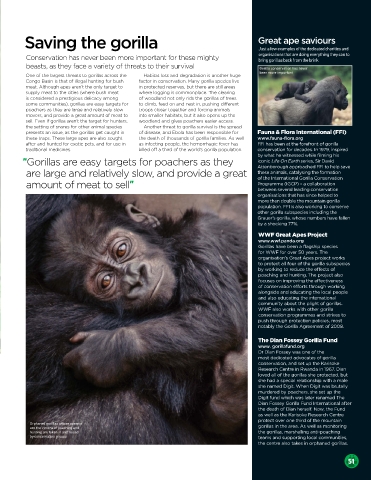
Orphaned gorillas whose parents
are the victims of poaching and gorillas in the area. As well as monitoring
hunting are taken in and raised the gorillas, marshalling anti-poaching
by conservation groups teams and supporting local communities,
the centre also takes in orphaned gorillas.
51

