


Page 135 - (DK Eyewitness) Travel Guide - Hungary
P. 135
HUNGAR Y REGION B Y REGION 133
AROUND
BUDAPEST
Strategically sited castles and vast cathedrals,
including Hungary’s largest, look out over the
pleasure boats navigating the Danube Bend. The
unique evening sunlight here has always attracted artists to the region,
and evidence of a rich cultural heritage is everywhere. Gödöllő boasts
the stunning Royal Palace, while the Duna-Ipoly National Park offers
a superb habitat for native wildlife.
With its darting twists and turns, steep seeking respite today are the thousands
banks and deep valleys, the Danube of Budapest residents who keep holiday
Bend has been a site of refuge for almost homes in the area, and the legions of
2,000 years. Rome built garrisons here, and visitors on short trips from the capital –
there are remnants of that great empire a fact that is reflected in local prices.
everywhere. The natural fortress that is the Over on the east bank the rolling hills
Danube’s west bank was later the chosen of the Börzsöny and the Duna-Ipoly
site for the construction of the historic National Park – home to more than
towns of Visegrád and Esztergom, both half of Hungary’s native bird species –
built with protection and defence in mind. make for sensational hiking, walking
Esztergom was the scene of the Hungarian and birdwatching.
conversion to Christianity, and Visegrád This is perhaps the most cosmopolitan
was the impenetrable seat of royal power. part of Hungary, where visitors can expect
Later still came Szentendre, which, like warm, welcoming and multilingual hosts,
Ráckeve to the south of the capital, was but in summer it can be very hot and busy.
founded by Serbs fleeing persecution at As autumn usually brings plenty of rain and
home and, though few Serbs remain, winter can be very cold, the early spring –
traces of their culture and their religion March, April and May – may be the best
are evident everywhere. Those who come time for exploring these historic places.
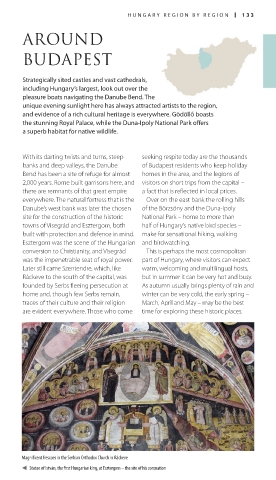
Magnificent frescoes in the Serbian Orthodox Church in Ráckeve
Statue of István, the first Hungarian king, at Esztergom – the site of his coronation
Hun_132_133_Regional_Intro.indd 133 17/02/2015 12:53

