


Page 108 - (DK) The Dog Encyclopedia
P. 108
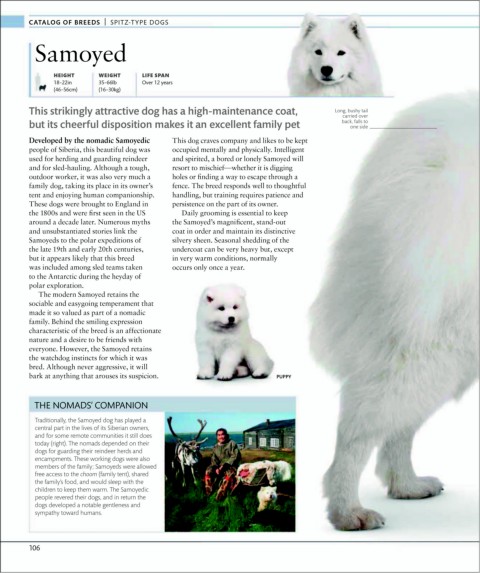
CATALOG OF BREEDS  |  SPITZ-TYPE DOGS


           Samoyed


                 HEIGHT       WEIGHT       LIFE SPAN
                 18–22in      35–66lb      Over 12 years
                 (46–56cm)    (16–30kg)


          This strikingly attractive dog has a high-maintenance coat,                                Long, bushy tail
                                                                                                       carried over
          but its cheerful disposition makes it an excellent family pet                                back, falls to
                                                                                                         one side

          Developed by the nomadic Samoyedic        This dog craves company and likes to be kept
          people of Siberia, this beautiful dog was   occupied mentally and physically. Intelligent
          used for herding and guarding reindeer    and spirited, a bored or lonely Samoyed will
          and for sled-hauling. Although a tough,   resort to mischief—whether it is digging
          outdoor worker, it was also very much a   holes or finding a way to escape through a
          family dog, taking its place in its owner’s   fence. The breed responds well to thoughtful
          tent and enjoying human companionship.    handling, but training requires patience and
          These dogs were brought to England in     persistence on the part of its owner.
          the 1800s and were first seen in the US       Daily grooming is essential to keep
          around a decade later. Numerous myths     the Samoyed’s magnificent, stand-out
          and unsubstantiated stories link the      coat in order and maintain its distinctive
          Samoyeds to the polar expeditions of      silvery sheen. Seasonal shedding of the
          the late 19th and early 20th centuries,    undercoat can be very heavy but, except
          but it appears likely that this breed     in very warm conditions, normally
          was included among sled teams taken       occurs only once a year.
          to the Antarctic during the heyday of
          polar exploration.
             The modern Samoyed retains the
          sociable and easygoing temperament that
          made it so valued as part of a nomadic
          family. Behind the smiling expression
          characteristic of the breed is an affectionate
          nature and a desire to be friends with
          everyone. However, the Samoyed retains
          the watchdog instincts for which it was
          bred. Although never aggressive, it will
          bark at anything that arouses its suspicion.                             PUPPY


           THE NOMADS’ COMPANION

           Traditionally, the Samoyed dog has played a
           central part in the lives of its Siberian owners,
           and for some remote communities it still does
           today (right). The nomads depended on their
           dogs for guarding their reindeer herds and
           encampments. These working dogs were also
           members of the family; Samoyeds were allowed
           free access to the choom (family tent), shared
           the family’s food, and would sleep with the
           children to keep them warm. The Samoyedic
           people revered their dogs, and in return the
           dogs developed a notable gentleness and
           sympathy toward humans.


          106

