


Page 92 - (DK) The Dog Encyclopedia
P. 92
CATALOG OF BREEDS  |  WORKING DOGS


           Boxer


                 HEIGHT       WEIGHT       LIFE SPAN          Gold
                 21–25in      55–71lb      10–14 years        Black brindle                                                       High-set
                 (53–63cm)    (25–32kg)                 White markings should not exceed a third of coat color.                   tail, held
                                                                                                                                  upright

          This clever, loyal, exuberant, and fun-loving dog is ideal
          for an energetic owner who enjoys an outdoor life


          Once a Boxer-owner, always a Boxer-       into late maturity. Almost any sort of fun
          owner—this German breed is so big on      keeps a Boxer happy but, ideally, it needs
          personality that few who live with it ever   a good two-hour walk every day with
          look at another type of dog. The Boxer    plenty of room for romping around in the
          in its modern form was developed in the    open. At home, given its stamina and
          19th century, and its ancestry is thought    curiosity, a Boxer enjoys a large yard
          to include mastiff-type dogs such as the   where it has space to roam and
          Great Dane (see p.96) and the Bulldog     interesting corners to explore.
          (see p.95). Powerful and athletic, it was bred      This highly intelligent dog can be a
          primarily for fighting and bullbaiting, but   handful to train but is obedient provided
                                                                                                          Muscular
          was also used for farm work, hauling, and   it receives calm and consistent commands          hindquarters
          for hunting and holding down large game   and clear leadership. With early socializing,
          such as wild boar. Because of its endurance   a Boxer is likely to get along well with any
          and courage, the breed is used today as a   other pets in the family, although out on
          police and military search and rescue dog   walks its hunting instincts may
          and for guard work.                       be aroused if there are birds
             The Boxer’s history, its proud, upstanding   or small animals to chase.
          attitude, and forward-thrusting jaw give
          the impression of an intimidating dog,
          and certainly it can be protective of home
          and family, but it makes a wonderful
          companion. It is loyal, affectionate,
          endearingly attention-seeking, and a
          boisterous but tolerant friend for children.
          This energetic breed suits fit, active owners
          since it keeps its high spirits and playfulness         PUPPY


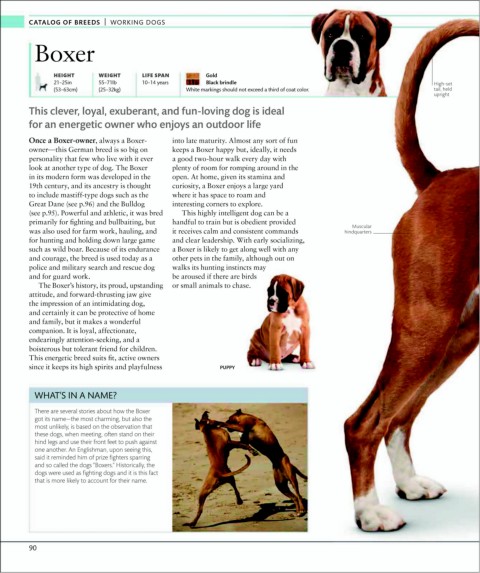
           WHAT’S IN A NAME?

           There are several stories about how the Boxer
           got its name—the most charming, but also the
           most unlikely, is based on the observation that
           these dogs, when meeting, often stand on their
           hind legs and use their front feet to push against
           one another. An Englishman, upon seeing this,
           said it reminded him of prize fighters sparring
           and so called the dogs “Boxers.” Historically, the
           dogs were used as fighting dogs and it is this fact
           that is more likely to account for their name.


          90

